
If you are planning to enter Tibet by train, the Qinghai-Tibet Railway is the established rail route to Lhasa. It runs about 1,956 km from Xining in Qinghai to Lhasa, with the highest point reaching 5,072 meters at Tanggula Pass. About 960 km of the line is above 4,000 meters, and around 550 km crosses continuous permafrost. The Golmud-Lhasa section opened to passenger service on July 1, 2006.
For travelers, the practical choice is usually between taking a train for the plateau experience or flying to Lhasa to save time. If you choose the train, Xining to Lhasa is the most focused way to experience the Qinghai-Tibet Railway, while through trains from Beijing, Shanghai, Chengdu and other cities give you a much longer journey.
The train has oxygen-supply systems and sleeper berths, but oxygen on board does not mean altitude sickness is impossible. You are still traveling through an environment that reaches more than 5,000 meters.
Qinghai-Tibet Railway in 30 Seconds
| Question | Quick Answer |
|---|---|
| Route | Xining – Golmud – Lhasa |
| Full railway length | About 1,956 km |
| Golmud-Lhasa section | 1,142 km |
| Highest point | 5,072 m at Tanggula Pass |
| Highest station | Tanggula Station, about 5,068 m |
| Railway above 4,000 m | About 960 km |
| Continuous permafrost | About 550 km |
| Xining-Lhasa train time | Roughly 20–22 hours, depending on train |
| Opened to Lhasa | July 1, 2006 |
| Oxygen on Tibet trains | Yes |
| Best sleeper for a long journey | Soft sleeper |
| Main scenic section | Golmud – Tanggula – Nagqu – Lhasa |
| Main engineering challenges | Permafrost, high altitude, fragile environment |
The exact train schedule and fares change, so treat travel times and ticket prices as planning references rather than permanent figures.
What Is the Qinghai-Tibet Railway?
The Qinghai-Tibet Railway, also written as Qinghai-Tibet railway or Qinghai Tibet Railway, is the railway connecting Qinghai with Tibet.
It starts in Xining, the capital of Qinghai Province, and ends in Lhasa, the capital of the Tibet Autonomous Region. The route passes through Golmud, the Kunlun Mountains, Hoh Xil, Tanggula Pass, Amdo, Nagqu and Damxung before descending toward Lhasa.
The full line is about 1,956 km long, but it was not constructed as one single project.
The first section, Xining-Golmud, is about 814 km and entered operation in 1984. The much more difficult Golmud-Lhasa section is 1,142 km long and was built between 2001 and 2006.
That is why you will see two different distances when researching the railway. Both are correct, but they refer to different sections.
Why do websites give different Qinghai-Tibet Railway distances?
The full Xining-Lhasa railway is about 1,956 km, while the Golmud-Lhasa section is 1,142 km.
When people talk about the famous high-altitude engineering achievement of the Qinghai-Tibet Railway, they are usually referring to the Golmud-Lhasa section.
For tourists, the distinction is useful because the landscape changes dramatically after Golmud. This is where the train begins crossing the high plateau that most visitors associate with the Qinghai-Tibet Railway.
Qinghai-Tibet Railway History
The history is longer than the 2006 opening date suggests.
The Xining-Golmud section was completed in the first phase and entered operation in 1984. The second phase, from Golmud to Lhasa, was eventually approved and construction started on June 29, 2001. It was completed and opened in 2006.
The first phase itself took many years. Current Tibetan government information records that the Xining-Golmud project began in 1958, was laid through in 1979 and entered operation in 1984. The difficult second phase was delayed for decades because engineers had not yet solved the problems of building and maintaining a railway across the plateau’s permafrost.
So when was the Qinghai-Tibet Railway built?
A useful answer is:
1958–1984: first-phase development of the Xining-Golmud section
2001–2006: construction of the Golmud-Lhasa section
July 1, 2006: the railway to Lhasa officially opened
Qinghai-Tibet Railway Construction: Why Was It So Difficult?
The construction of the Qinghai-Tibet Railway was not simply a matter of building tracks through mountains.
Engineers had to solve three major problems at the same time:
1. Qinghai-Tibet Railway Permafrost
The railway crosses about 550 km of continuous permafrost. Frozen ground is sensitive to changes in temperature. If the ground underneath a railway embankment warms and becomes unstable, settlement can affect the track.
Engineers therefore used different methods according to local conditions, including elevated bridges, ventilated roadbeds, crushed-rock structures and thermal systems such as heat pipes.
This is also why you will see long bridges and unusual trackside structures in photographs of the railway. They are not there simply for dramatic scenery; many are part of the engineering solution.
2. Extreme Altitude
The Qinghai-Tibet Railway altitude is one of its defining characteristics.
About 960 km of the line lies above 4,000 meters, and the highest point is 5,072 meters at Tanggula Pass.
For construction workers, this meant working in low-oxygen conditions at extreme altitude. For the railway itself, it meant designing locomotives, carriages, tunnels, bridges and operating systems for a very different environment from ordinary railways.
3. A Fragile Plateau Environment
The route crosses grasslands, wetlands, rivers and wildlife habitats.
Environmental protection was therefore included in the engineering project. The Golmud-Lhasa section had a total investment of about RMB 33.09 billion, including RMB 1.54 billion for environmental protection, according to China’s Ministry of Ecology and Environment.
The railway was designed with measures intended to reduce impacts on wetlands, vegetation and wildlife movement.
Qinghai-Tibet Railway Facts and World Records
The railway became famous because of several records.
The most useful Qinghai-Tibet Railway facts are:
- It is recognized as the world’s highest railway.
- The Golmud-Lhasa section is about 1,142 km long.
- The railway reaches 5,072 meters at Tanggula Pass.
- Tanggula Station stands at about 5,068 meters, making it the world’s highest railway station.
- About 960 km of the railway is above 4,000 meters.
- Around 550 km passes through continuous permafrost.
- Fenghuoshan Tunnel was recognized as the world’s highest railway tunnel during the project’s construction.
- Kunlun Mountain Tunnel is one of the major high-altitude permafrost tunnels on the route.
These numbers are interesting, but there is one important point for travelers: you do not need to memorize the records to enjoy the train. The real experience is watching the landscape change as the train climbs onto the plateau.
Qinghai-Tibet Railway Map and Route
A simplified Qinghai-Tibet Railway map looks like this:
Xining → Delingha → Golmud → Kunlun Mountains → Hoh Xil → Tuotuo River → Tanggula Pass → Amdo → Nagqu → Damxung → Lhasa
The most dramatic high-altitude section begins after Golmud.
[Recommended page visual: Add a custom Qinghai-Tibet Railway Map here showing Xining, Golmud, Kunlun Mountains, Hoh Xil, Tanggula Pass, Nagqu, Damxung and Lhasa.]
The railway does not take you directly to Mount Everest, Mount Kailash or most of Tibet’s major attractions. It brings you to Lhasa, where you can continue your Tibet journey by road or join a private or group tour.
For example, travelers can continue from Lhasa toward Shigatse and Everest Base Camp, or travel west toward Ngari and Mount Kailash.
What Can You See from the Qinghai-Tibet Train?
The scenery is the main reason many travelers choose the train.
After Golmud, the landscape becomes much more open. You see fewer settlements, almost no trees and long stretches of mountains, grassland and high-altitude wilderness.
Main Scenic Sections
| Railway Section | What You May See | Best Time to Watch |
|---|---|---|
| Xining–Golmud | Mountains, valleys and changing landscapes | Daytime |
| Golmud–Kunlun Mountains | Gobi, snow mountains and Yuzhu Peak area | Daytime |
| Hoh Xil | Vast wilderness and plateau grasslands | Daytime |
| Tanggula Pass | Snow mountains and the railway’s highest point | Daylight |
| Tanggula–Nagqu | High-altitude grasslands and wide valleys | Daylight |
| Nagqu–Damxung | Grasslands and mountain scenery | Daytime |
| Damxung–Lhasa | Mountains, valleys and the gradual descent toward Lhasa | Daytime |
You may also see Tibetan antelope and other plateau wildlife, although wildlife sightings are never guaranteed.
Best Window Seats on the Qinghai-Tibet Railway
There is no single seat that gives you the best view for the whole journey.
The railway changes direction, the landscape changes from one side to another, and some of the most interesting views appear only for a few minutes. I would not spend the whole trip worrying about whether you are on the “correct” side.
For the most important scenery, stay near a window during the Golmud-Tanggula-Nagqu section, especially in daylight.
If photography matters to you, keep your camera ready before reaching the major mountain sections rather than waiting until the train arrives at a famous station.
Qinghai-Tibet Train: Oxygen, Sleepers and Facilities
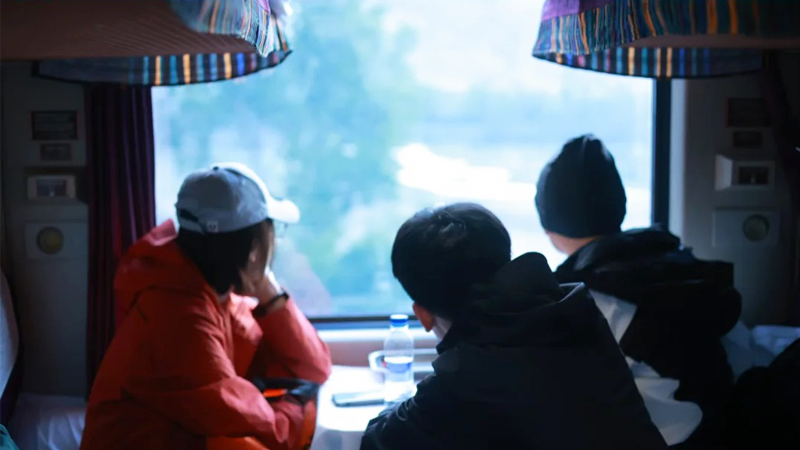
The trains running to Tibet are specially equipped for high-altitude operation.
Depending on the train and carriage, facilities include:
- Hard seats
- Hard sleepers
- Soft sleepers
- Dining facilities
- Toilets
- Air-conditioning systems
- Oxygen-supply systems
- Oxygen outlets for passenger use
- High-altitude information displays
China’s railway development information confirms that oxygen-generation and oxygen-supply equipment is installed in the locomotive and passenger carriages to provide supplemental oxygen at high altitude.
Does the Qinghai-Tibet Railway have oxygen?
Yes. Tibet trains have oxygen-supply systems, but this does not mean altitude sickness is impossible.
The train can provide additional oxygen when needed, but the railway still reaches Golmud, more than 5,000 meters. Some travelers may experience headache, dizziness, nausea, fatigue or shortness of breath.
If you feel unwell, tell the train staff rather than simply assuming that you need to “push through” it.
Qinghai-Tibet Railway Soft Sleeper
For a long journey, I recommend a soft sleeper if your budget allows.
A soft sleeper normally has four berths in a compartment and provides more privacy and a quieter place to rest than a hard sleeper. For a journey lasting around 20 hours or more, that difference matters.
If you are traveling from Beijing or another distant city, a sleeper is much more practical than sitting for the entire journey.
Qinghai-Tibet Railway Ticket Price
Ticket prices depend on your departure city and seat class.
As a current 2026 reference on China Railway / 12306, Xining-Lhasa fares are around:
| Class | Approx. Fare |
|---|---|
| Hard seat | RMB 224 |
| Hard sleeper | RMB 521 |
| Soft sleeper | RMB 808 |
These figures reflect current published train-fare information and can vary by train and booking channel.
For comparison, a Beijing-Lhasa soft sleeper is currently listed at about RMB 1,186, with a journey of roughly 40 hours.
Which departure city is best?
If your priority is the Qinghai-Tibet Railway itself, I would choose Xining.
You get the full Xining-Lhasa route without spending another 20 hours crossing China before reaching the plateau section.
If your China itinerary already includes Beijing, Shanghai or Chengdu, however, taking a direct train from one of those cities can be convenient.
How Long Does the Qinghai-Tibet Railway Take from Beijing?
The Beijing-Lhasa train currently takes about 40 hours, depending on the service and timetable. A current 2026 timetable lists the journey at about 39 hours 58 minutes.
That does not mean 40 hours of Qinghai-Tibet scenery.
The train crosses much of China before reaching Xining and then continues toward Lhasa. If your main reason for taking the train is to see the plateau, pay attention to when the train reaches the Xining-Golmud-Lhasa section.
A shorter train journey with good daylight on the plateau can be more useful for sightseeing than simply choosing the longest possible train ride.
Can You Get Altitude Sickness on the Qinghai-Tibet Train?
Yes. You can experience altitude sickness on the train because the railway climbs to more than 5,000 meters.
The oxygen system can make the environment easier to tolerate, but it does not remove the physiological effects of altitude.
This is also why you should not think of the train as a guaranteed method of preventing altitude sickness.
If you have a medical condition that could be affected by high altitude, discuss the trip with your doctor before traveling.
Once you arrive in Lhasa, give yourself time to rest instead of immediately planning a packed sightseeing schedule.
How to Experience the Qinghai-Tibet Railway
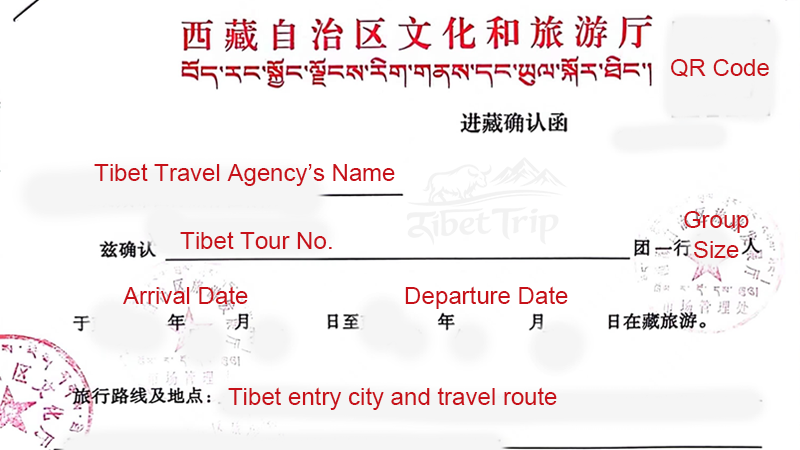
For foreign travelers, the railway journey needs to be arranged together with the Tibet entry requirements.
You cannot treat a train ticket to Lhasa like an ordinary domestic China train ticket.
Foreign travelers need the required Tibet Travel Permit / Tibet Entry Permit arranged before entering Tibet, and the exact document-checking procedure can depend on the departure station and current railway rules. Travel agencies should confirm the requirements for your specific train before departure.
Important: Check the Original Permit Requirement Before Departure
If your train booking requires the original Tibet Travel Permit, you must have the original document available for railway verification and boarding. Do not assume that a phone photo or scanned copy will always be accepted.
Because document-checking procedures can change by station and travel arrangement, I recommend confirming this with your Tibet travel agency before you leave your hotel for the railway station.
TibetTrip can help travelers arrange Tibet train tickets and the required Tibet travel documents as part of their Tibet trip.
If you are booking through us, we will tell you what documents are needed for your route and how to handle them before boarding.
Qinghai-Tibet Railway vs Sichuan-Tibet Railway
These two railways are often mentioned together, but they are not currently the same type of travel option.
| Feature | Qinghai-Tibet Railway | Sichuan-Tibet Railway |
|---|---|---|
| Main route | Xining–Golmud–Lhasa | Chengdu–Ya’an–Nyingchi–Lhasa |
| Complete Chengdu-Lhasa railway operating? | No | No |
| Established train route to Lhasa | Yes | Not yet as a complete railway |
| Main landscape | High plateau, open wilderness, snow mountains | Deep valleys, mountains, gorges and eastern Tibet |
| Main engineering challenge | Permafrost and extreme altitude | Extreme terrain, elevation changes, tunnels and complex geology |
| Best choice today | Travelers wanting a proven train route to Lhasa | Travelers interested in the future railway |
The Sichuan-Tibet Railway is still under construction in key sections. The approved Ya’an-Linzhi section is about 1,011 km, with an estimated investment of about RMB 319.8 billion.
So if you are planning your Tibet trip now, do not assume that you can simply book a complete Chengdu-Lhasa journey on the future Sichuan-Tibet Railway.
For a proven railway route into Lhasa today, the Qinghai-Tibet Railway remains the established choice.
Is the Qinghai-Tibet Railway Worth Taking?
My answer is yes, if you have enough time and care about the journey itself.
The train is not the fastest way to reach Lhasa. Flying is much quicker, and travelers with a tight itinerary may be better off using the extra time for Tibet sightseeing.
The train makes more sense if you want to:
- See the Qinghai-Tibet Plateau gradually change outside your window
- Experience one of the world’s highest railway routes
- Watch the landscape around Tanggula Pass and Hoh Xil
- Avoid flying directly into Lhasa
- Turn the journey to Tibet into part of the trip
I would not take the train simply because someone told you that it is “the best way” to acclimatize. The altitude still becomes very high, and altitude sickness can still occur.
Take it because you want to experience the railway and the plateau.
What Has Changed in 2026?
There is an important new development this year.
The Golmud-Lhasa section is undergoing electrification-related construction in 2026, twenty years after the railway opened. Tibet government information confirms that the Golmud-Lhasa electrification upgrade has entered the construction stage, with supporting power infrastructure also being developed.
The project is intended to move the section from diesel traction toward electric operation and improve the long-term efficiency of the railway.
For travelers, however, there is no reason to change your 2026 itinerary based on future operating plans. Use the current published train schedule for your actual travel date. The upgraded railway will only change the passenger experience after the relevant works are completed and new operating arrangements are officially introduced.
Qinghai-Tibet Railway Review: My Practical Take
The strongest reason to take the Qinghai-Tibet Railway is not the world records.
It is the gradual change in landscape.
You leave the lower plateau around Qinghai, pass through the dry landscapes around Golmud, and then spend hours crossing a much more open high-altitude world of snow mountains, grasslands, rivers and almost empty horizons.
The main downside is time. A train journey can take around 20 hours from Xining and much longer from Beijing or Shanghai.
So my practical rule is simple:
If you have time, take the train. If your Tibet vacation is short, fly and spend the saved time in Tibet.
And if you take the train, choose a sleeper for a long journey, check which part of the route will be in daylight, keep your Tibet documents ready, and do not treat the oxygen system as a substitute for sensible altitude precautions.
FAQs About the Qinghai-Tibet Railway
Is the Qinghai-Tibet Railway open now?
Yes. Passenger trains continue to operate to Lhasa, and the Golmud-Lhasa section opened on July 1, 2006.
How long is the Qinghai-Tibet Railway?
About 1,956 km from Xining to Lhasa. The Golmud-Lhasa section is 1,142 km.
What is the highest point of the Qinghai-Tibet Railway?
5,072 meters at Tanggula Pass.
What is the highest railway station?
Tanggula Station, at about 5,068 meters.
Does the Qinghai-Tibet train have oxygen?
Yes. Tibet trains are equipped with oxygen-supply systems designed for the high-altitude environment.
Can foreigners take the Qinghai-Tibet train?
Yes, but foreign travelers must meet Tibet’s entry requirements and arrange the required Tibet travel documents before entering Tibet. The exact document-checking process should be confirmed for your departure station and train.
Do I need the original Tibet Travel Permit to board?
If your specific train and departure station require the original document, yes. Do not assume a digital copy is sufficient. Confirm the current requirement with your Tibet travel agency before departure.
Which is better, hard sleeper or soft sleeper?
Soft sleeper is better for most long-distance travelers. It provides a four-berth compartment and more privacy, which is useful when the journey lasts 20 hours or more.
Which is the best window side on the Qinghai-Tibet Railway?
There is no single best side for the entire journey. For the best scenery, focus on the Golmud-Tanggula-Nagqu section and try to be near a window during daylight.
Is Xining to Lhasa the best Qinghai-Tibet Railway journey?
For travelers whose main goal is the railway experience, yes, it is one of the most practical choices. It focuses your journey on the full Xining-Lhasa railway without adding another long train ride from eastern China.
How much is a Qinghai-Tibet Railway ticket?
Xining-Lhasa tickets currently start at around RMB 224 for a hard seat, with soft sleeper around RMB 808 on published 2026 fares. Prices vary by train and booking channel.
How long does the train take from Beijing to Lhasa?
Around 40 hours on the current Beijing-Lhasa service.
Is the Qinghai-Tibet Railway good for acclimatization?
It can provide a gradual journey onto the plateau, but it does not guarantee protection from altitude sickness. The train itself reaches more than 5,000 meters.
Is the Sichuan-Tibet Railway open?
Not as a complete Chengdu-Lhasa railway. Important sections are still under construction. The approved Ya’an-Linzhi section is about 1,011 km.
Final Advice from Metok
If this is your first trip to Tibet and you have enough time, I would seriously consider taking the Qinghai-Tibet Railway.
Just keep your expectations realistic. It is a long train ride, the altitude is real, and not every part of the journey will look like a travel photograph.
What makes the trip worthwhile is the change you can actually see through the window: Qinghai gradually gives way to the high plateau, the mountains become larger, settlements become fewer, and the train eventually descends toward Lhasa.
For travelers who want to make the journey easier, TibetTrip can help arrange the Qinghai-Tibet train ticket together with your Tibet Travel Permit and other necessary travel arrangements.
If your priority is scenery and the railway experience, choose the train.
If your priority is saving time, fly.
Either way, plan the Tibet documents first. The train ticket is only one part of getting to Lhasa.