
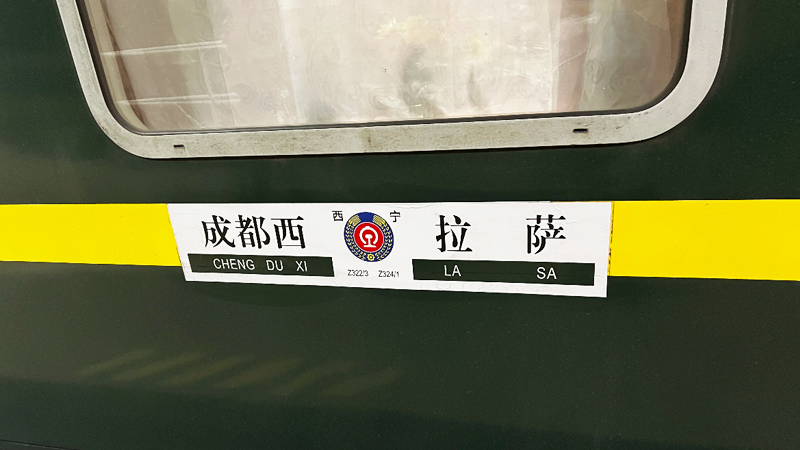
Quick answer: Yes, you can take a direct train from Chengdu to Lhasa. The current service is Z322, running from Chengdu West Railway Station to Lhasa Railway Station. The latest published timetable available in July 2026 shows a journey of about 34 hours 38 minutes, with departure at around 20:46 and arrival at 07:24 on the third day. Published fares are about RMB 302.5 for hard seat, RMB 663.5 for hard sleeper and RMB 1,034.5 for soft sleeper. The train runs every other day.
If the direct train is available and you have two extra days, it is a good way to experience the Qinghai-Tibet Railway. If you have limited time, flying is much more efficient. And if Z322 is sold out, Chengdu → Xining by flight → Lhasa by train is the most useful alternative.
I’m Metok, and I help travelers plan Tibet trips at TibetTrip. Train tickets are one of the practical parts of a Tibet trip that need to be arranged early, especially when travelers want to enter Tibet by rail. Here is what you need to know before committing to the Chengdu–Lhasa train.
Information checked: August 2026. Train schedules and fares can change, so the final departure time, operating date and fare shown for your travel date should always be confirmed before booking.
Chengdu to Lhasa Train: Quick Facts
| Item | Current information |
|---|---|
| Direct train | Yes |
| Train number | Z322 |
| Departure | Chengdu West Railway Station |
| Arrival | Lhasa Railway Station |
| Frequency | Every other day |
| Travel time | About 34–36 hours |
| Current published timetable | Around 20:46 → 07:24, third day |
| Railway distance | About 3,070 km |
| Hard seat | About RMB 302.5 |
| Hard sleeper | About RMB 663.5 |
| Soft sleeper | About RMB 1,034.5 |
| Main route | Chengdu → Guangyuan → Lanzhou → Xining → Delingha → Golmud → Nagqu → Lhasa |
| Oxygen | Available |
| Hot drinking water | Available |
| Shower | No |
| Charging | Available, but limited |
| Wi-Fi | Do not rely on onboard Wi-Fi |
| Tibet Travel Permit | Required for foreign travelers entering Tibet |
The figures above reflect the latest timetable and fare information available when this article was checked. Some travel websites still display older Z322 schedules, so you may find departure times such as 21:10 or 21:37 elsewhere. For example, China Discovery still shows an older 2026 timetable, while a July 7, 2026 update from TravelChinaGuide lists 20:46–07:24 and 34h38m.
For your actual travel date, the current railway booking system is more important than an older webpage.
Chengdu to Lhasa Train Schedule and Timetable
The direct Chengdu–Lhasa service is Z322. It runs every other day rather than daily. That makes planning slightly less flexible than routes from cities such as Xining.
The latest published timetable available in July 2026 gives:
| Station | Approx. timing |
|---|---|
| Chengdu West | 20:46, Day 1 |
| Guangyuan | Day 2 |
| Lanzhou | Day 2 |
| Xining | Day 2 |
| Delingha | Day 2 |
| Golmud | Day 2 |
| Nagqu | Day 3 |
| Lhasa | 07:24, Day 3 |
The train leaves Chengdu in the evening, spends the following day crossing Gansu and Qinghai, reaches the high plateau around the Xining–Golmud section, and arrives in Lhasa the following morning.
The exact intermediate arrival and departure times can change with timetable revisions, so I would not build a tight flight or tour connection around an old timetable found online.
How long is the Chengdu to Lhasa train?
Plan for about 35 hours.
That means two nights on the train and most of one full day onboard. If your Tibet itinerary is only five or six days long, those two days become a significant part of your trip. If you have plenty of time and enjoy rail travel, the longer journey is part of the attraction.
Chengdu to Lhasa Train Route and Map
The current Chengdu–Lhasa train does not travel on the future Sichuan-Tibet Railway.
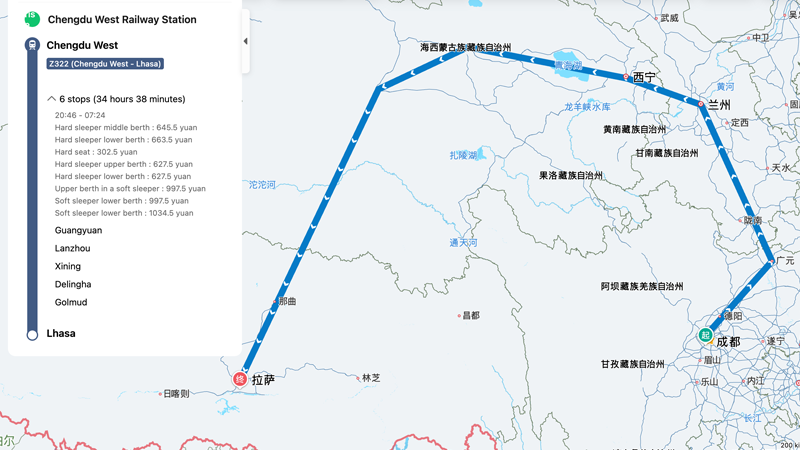
Instead, Z322 takes a northern route through Lanzhou and Xining, then joins the Qinghai-Tibet Railway toward Lhasa.
Chengdu to Lhasa Train Route
Chengdu → Guangyuan → Lanzhou → Xining → Delingha → Golmud → Nagqu → Lhasa
The current railway distance is about 3,070 km according to current Chengdu–Lhasa route information. Some sources quote around 3,360 km, so you may see different numbers online. The difference comes from how railway route mileage is reported and which route data a source uses.
Chengdu to Lhasa Train Map
The most important point for travelers is Xining and Golmud.
After Xining, the train moves deeper into the Qinghai Plateau. From Golmud onward, the journey becomes the classic high-altitude Qinghai-Tibet Railway experience.
Chengdu to Lhasa Train Price and Ticket Cost
There are three main ticket classes.
| Class | Published fare | What to expect |
|---|---|---|
| Hard seat | RMB 302.5 | Cheapest, but uncomfortable for 35 hours |
| Hard sleeper | RMB 663.5 | Six-berth open sleeper |
| Soft sleeper | RMB 1,034.5 | Four-berth private compartment |
These are the latest published fares available in the July 2026 timetable update.
Hard seat
Hard seat is the cheapest option, but for a Chengdu–Lhasa journey of more than 34 hours, it is not a comfortable choice for most international travelers.
You have a seat, but no bed.
For a short daytime train, that would be fine. For this route, the saving is usually not worth the loss of comfort.
Hard sleeper
Hard sleeper is much more practical.
You get a sleeping berth in an open six-berth section. There is less privacy than in a soft sleeper, but you can lie down and sleep properly.
For travelers watching their budget, this is the reasonable middle ground.
Soft sleeper
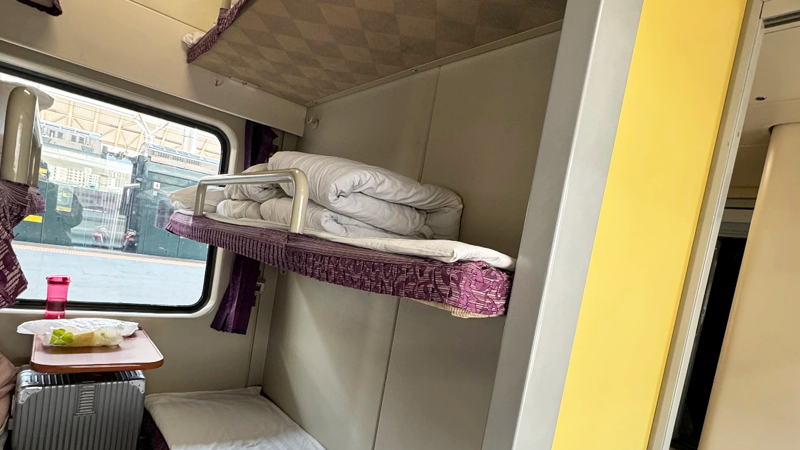
Soft sleeper has four berths in a compartment and provides considerably more privacy.
For two nights on a train, this is the class I would choose when the fare difference fits the budget.
Simple rule: hard sleeper for value, soft sleeper for comfort.
What Is the Chengdu–Lhasa Train Like?
The Tibet train is a long-distance sleeper train, not a luxury train.
That is worth understanding before you book it. You are paying for the railway experience and the scenery, not premium hotel-style service.
The train has the basic facilities needed for a long journey, and the high-altitude carriages are equipped with oxygen systems. But you should still bring the small things that make a 35-hour journey easier.
Sleeping berths
Soft sleeper compartments have four berths and a door. Hard sleeper sections have six berths and are open to the corridor.
You will share the train with Chinese passengers, Tibetan travelers and other visitors. English is not widely spoken onboard, so having your destination and hotel information saved on your phone is useful.
An eye mask and earplugs are worth packing.
Food on the Chengdu to Lhasa Train
There is a dining car, and food and drinks are also sold from carts in the carriages.
The food is mainly Chinese-style. Simple meals are commonly in the RMB 20–40 range, while more substantial dishes can cost more. Prices and available dishes vary. Older travel sources often quote around RMB 20 for a meal.
If you are vegetarian, have food allergies, or simply prefer familiar food, bring some snacks from Chengdu.
Good choices include: bread, fruit, nuts, biscuits, instant noodles, chocolate, tea or coffee, electrolyte drinks.
Hot boiled water is available onboard, so instant noodles are easy to prepare.
Drinking Water
Hot drinking water is available on the train.
Bring a reusable bottle or thermos and refill it from the designated hot-water dispenser.
For a 35-hour journey, this is more convenient than constantly buying bottled drinks.
Is There Oxygen on the Chengdu–Lhasa Train?
Yes.
The Tibet trains are equipped with oxygen supply systems for the high-altitude sections. Oxygen can be supplied through the carriage system, and individual oxygen outlets are available for passengers when needed.
But there is an important point here:
The train’s oxygen system does not mean you cannot get altitude sickness.
Lhasa is around 3,650 m above sea level, and the railway crosses much higher terrain before reaching the city.
The train can make the transition more gradual than flying directly to Lhasa, but everyone responds differently to altitude.
After arriving, keep your first day easy. If you develop severe or rapidly worsening symptoms, tell your guide or hotel staff and seek medical attention.
Is There a Shower on the Chengdu–Lhasa Train?
No. There is no proper shower facility.
There are washbasins where you can wash your face, brush your teeth and freshen up, but you cannot take a normal shower onboard.
For two nights on the train, pack:
- Wet wipes
- Toothbrush and toothpaste
- Small towel
- Deodorant
- Clean T-shirt
- Comfortable sleeping clothes
It makes a bigger difference than you might expect.
Toilets on the Chengdu–Lhasa Train
Toilets are located at the ends of the carriages.
The train has both Western-style and squat toilet facilities depending on the carriage. Bring your own toilet paper and wet wipes, even though the toilets are cleaned during the journey.
One practical point: toilets may be unavailable when the train is stopped at stations. Don’t wait until the last minute.
Can You Charge Your Phone?
Yes, charging facilities are available, but sockets are limited and may be shared.
Bring a power bank.
If you are carrying a phone, camera, tablet and other devices, charge them before boarding rather than assuming you will always have access to a socket.
Is There Wi-Fi?
Do not plan your trip around onboard Wi-Fi.
Mobile coverage becomes less reliable as the train enters remote areas of Qinghai and Tibet.
Before leaving Chengdu, download:
- Offline maps
- Hotel details
- Train information
- Movies, Music, Podcasts, Books
- Important documents
The section without a strong mobile signal is exactly when you will be glad you did this.
Chengdu to Lhasa Train Scenery
The scenery changes slowly rather than all at once.
The first part of the journey is still familiar Chinese landscape: cities, villages, farmland and mountains around Sichuan and Gansu.
After Xining, the landscape becomes much more open.
The real plateau scenery appears as the train continues toward Golmud and Tibet.
Depending on weather and visibility, you may see:
- Qinghai Lake region
- Kunlun Mountains
- Kekexili
- High-altitude grasslands
- Tuotuo River
- Tanggula Mountains
- Snow-covered peaks
- Northern Tibetan grasslands
- Plateau lakes
- Tibetan antelope and other wildlife
The train crosses the Tanggula Pass area at more than 5,000 m, making this one of the highest railway journeys in the world.
What you can expect from different sections
| Section | Landscape | Best chance to see it |
|---|---|---|
| Chengdu–Lanzhou | Towns, farmland, mountains | Daylight depending on season |
| Lanzhou–Xining | Mountains and dry plateau landscapes | Day 2 |
| Xining–Golmud | Wide open Qinghai Plateau | Day 2 |
| Golmud–Nagqu | Kunlun Mountains, grasslands, high plateau | Day 2–3 |
| Nagqu–Lhasa | Northern Tibet, mountains and grasslands | Morning |
You don’t need to spend the entire day standing in the corridor with your camera.
The landscape is the main attraction, but weather matters. Clouds, snow and haze can change what you see.
How to Buy a Chengdu to Lhasa Train Ticket
Foreign travelers can use a valid foreign passport for real-name railway ticketing, subject to the current China Railway 12306 requirements.
The more important issue for Tibet travel is that the train ticket is not the only thing you need to arrange.
Foreign travelers entering Tibet need a Tibet Travel Permit, and the permit is normally arranged through a qualified Tibet travel agency as part of the required Tibet tour arrangements.
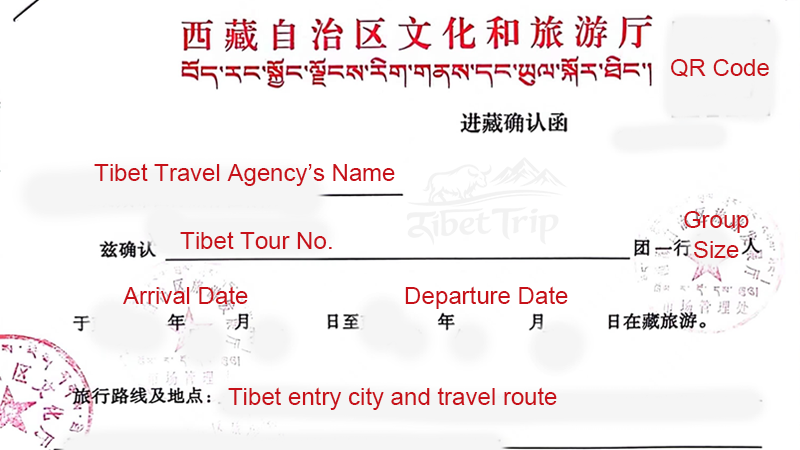
TibetTrip can help with the train ticket and Tibet Travel Permit
At TibetTrip, we can help arrange:
- Chengdu–Lhasa train tickets
- Tibet Travel Permit
- Tibet tour itinerary
- Hotels
- Railway station transfers
- Lhasa sightseeing
- Transportation inside Tibet
- Further travel to Everest, Shigatse, Kailash, Namtso and other destinations
Important about the Tibet Travel Permit
The practical document-handling rules for Tibet trains can vary by departure station and may be updated.
For Chengdu departures, current travel-industry guidance indicates that the required Tibet Travel Permit documentation must be presented as part of the boarding process; some sources specifically report that Chengdu is among the stations where a copy may be accepted, while other current guidance advises carrying the original.
TibetTrip’s advice is simple: carry the original Tibet Travel Permit supplied for your trip whenever possible. Do not rely only on a phone image or assume a photocopy will be accepted unless your travel agency has confirmed the current requirement for your departure station.
This avoids an unnecessary problem at the railway station.
Your passport and train booking information should also be kept with you.
When Should You Arrange the Permit?
Don’t leave the Tibet Travel Permit until the last few days.
The permit is linked to your Tibet itinerary and needs to be processed before you travel into the region. Current travel guidance commonly recommends allowing several weeks for the full process, especially when physical documents need to be delivered to your Chinese Mainland hotel.
The practical order is:
Confirm Tibet itinerary → provide passport documents → agency applies for permit → train ticket arranged → original permit delivered → travel to Chengdu station
The exact timing depends on your nationality, visa situation, itinerary and travel date, so your agency should confirm the deadline for your trip.
What If the Chengdu–Lhasa Train Is Sold Out?
This happens.
There is only one direct Chengdu–Lhasa service, and it runs every other day. During busy travel periods, sleeper berths can be difficult to secure.
The solution is not to rebuild your whole Tibet trip around one train.
There are two practical alternatives.
Three Ways to Travel from Chengdu to Lhasa
| Option | Route | Time efficiency | Train experience | Best for |
|---|---|---|---|---|
| 1. Direct train | Chengdu → Lhasa | ★★☆☆☆ | ★★★★★ | Travelers who want the complete train journey |
| 2. Flight + train | Chengdu → Xining → Lhasa | ★★★★☆ | ★★★★☆ | Sold-out direct trains |
| 3. Flight in + train out | Chengdu → Lhasa → Tibet → train out | ★★★★★ | ★★★☆☆ | Travelers with fixed Tibet dates |
Option 1: Direct Chengdu–Lhasa Train
This is the obvious choice if the train itself is part of your trip.
You get the entire railway journey from Chengdu to the Tibetan Plateau and experience the classic Qinghai-Tibet Railway route.
Best for: travelers with enough time who genuinely enjoy long train journeys.
Option 2: Fly from Chengdu to Xining, Then Take the Train
This is the best backup when Z322 is sold out.
Xining is already on the Qinghai-Tibet Railway. By flying from Chengdu to Xining first, you skip the Chengdu–Xining section and still experience the high-altitude railway journey from Qinghai toward Lhasa.
It is a good compromise between time and experience.
Best for: travelers who want the Tibet train experience but cannot get the direct Chengdu ticket.
Option 3: Fly to Lhasa, Then Take the Train Out
If your Tibet dates are fixed, this can be the most efficient arrangement.
Fly from Chengdu to Lhasa, spend your planned days in Tibet, then take a train from Lhasa back toward Chinese Mainland.
You still experience the Qinghai-Tibet Railway, but you don’t spend your first two days of the Tibet trip sitting on a train.
Best for: travelers with limited time who want to maximize their days in Tibet.
Which option should you choose?
If your priority is:
- The train experience: choose Chengdu → Lhasa by train
- Saving time but still wanting the plateau railway: choose Chengdu → Xining → Lhasa
- Maximizing your time in Tibet: fly into Lhasa and take the train out
If you send us your Chengdu arrival date and preferred Tibet entry date, TibetTrip can help you compare these three options before you lock in the itinerary.
Sichuan-Tibet Railway: What Is Happening in 2026?
This is where many Chengdu–Lhasa articles become confusing.
Today’s Chengdu–Lhasa train is not the future Sichuan-Tibet Railway.
The current Z322 follows the existing railway network through Lanzhou, Xining and Golmud before continuing toward Lhasa.
The future Sichuan-Tibet Railway will take a much more direct route through western Sichuan and eastern Tibet.
The Ya’an–Nyingchi section is planned to start from the existing Chengdu–Ya’an railway at Ya’an and pass through areas including western Sichuan, Qamdo and Nyingchi before connecting with the Lhasa–Nyingchi railway. The approved project is about 1,011 km, with 26 stations planned, and a design speed of 120–200 km/h.
It is still a construction project in 2026, not a railway you can use for a Chengdu–Lhasa passenger journey today.
Current 2026 procurement and construction notices show that work on the Ya’an–Nyingchi project is continuing, including new construction-related contracts and materials procurement.
So if you are planning a Tibet trip for 2026 or 2027:
Don’t wait for the Sichuan-Tibet Railway. The Chengdu–Lhasa train available today still uses the existing Qinghai-Tibet Railway route.
Practical Tips for Taking the Chengdu–Lhasa Train
- Don’t book the Tibet tour around an old train timetable: Z322 schedules have changed over time, and different travel websites still display different departure times. Check the current schedule for your actual date before confirming hotel and flight connections.
- Keep your permit and passport with you: Don’t put important travel documents in checked luggage. Keep your passport, Tibet Travel Permit and train information together.
- Pack for two nights, not one: The journey is around 35 hours. Bring toiletries, snacks, medication you normally use, a power bank, warm clothes and something to entertain yourself.
- Don’t expect a shower: Wet wipes and a clean T-shirt will make the journey much more comfortable.
- Download everything before Chengdu: Internet access can become unreliable across the plateau.
- Don’t schedule a demanding activity immediately after arriving in Lhasa: The train reaches Lhasa in the morning, but you will have spent almost a day and a half traveling. Lhasa is around 3,650 m above sea level. Your first day is better spent checking into your hotel, eating, drinking water and resting than immediately heading to a high pass.
- Soft sleeper is worth considering: For a 35-hour journey, the extra privacy makes a noticeable difference. If your budget is limited, hard sleeper is perfectly workable. Hard seat is the option I would avoid for this particular journey.
FAQs About the Chengdu to Lhasa Train
Is there a direct train from Chengdu to Lhasa?
Yes. The current direct service is Z322, running from Chengdu West to Lhasa. It operates every other day.
How long does the Chengdu to Lhasa train take?
The current published timetable shows about 34 hours 38 minutes, although older timetable versions may show slightly different durations.
How much is the Chengdu to Lhasa train?
The latest published fares are approximately:
- Hard seat: RMB 302.5
- Hard sleeper: RMB 663.5
- Soft sleeper: RMB 1,034.5
Fares can change when railway schedules and ticketing arrangements are updated.
How far is Chengdu to Lhasa by train?
The current route is about 3,070 km according to current Chengdu–Lhasa railway information. Other sources quote different mileage figures, so small discrepancies online are normal.
When can I book the Chengdu to Lhasa train?
Train tickets are released according to China Railway’s current ticketing schedule. Because Z322 runs every other day and sleeper demand can be high, it is better to coordinate your train booking with your Tibet itinerary rather than waiting until the last minute.
Can foreigners take the Chengdu to Lhasa train?
Yes. Foreign travelers can travel to Lhasa by train, but they need the required Tibet travel arrangements and Tibet Travel Permit before entering Tibet.
Do foreigners need a Tibet Travel Permit to take the train?
Yes. Foreign passport holders entering Tibet need a Tibet Travel Permit, which is arranged through a qualified Tibet travel agency. The permit is separate from your passport and Chinese visa.
Do I need the original Tibet Travel Permit?
The practical document requirement can depend on the departure station and current railway procedures. Some current sources report that Chengdu accepts a copy for train boarding, while other guidance recommends carrying the original. Our advice at TibetTrip is to carry the original permit whenever possible and confirm the current requirement with your travel agency before departure.
Can TibetTrip buy my Chengdu–Lhasa train ticket?
Yes. TibetTrip can help arrange the Chengdu–Lhasa train ticket together with your Tibet Travel Permit and Tibet tour arrangements. This is particularly useful when your Tibet entry date is fixed and the direct train is operating only every other day.
Is the soft sleeper worth it?
For a journey of about 35 hours, yes, if your budget allows it. You get a four-berth compartment and more privacy than a hard sleeper.
Is there oxygen on the train?
Yes. The Tibet trains have oxygen supply systems for the high-altitude sections, including individual oxygen outlets. The oxygen system helps, but it does not guarantee that you will have no altitude symptoms.
Is there a shower?
No. There are washbasins, but no proper shower facilities.
Can I charge my phone?
Yes, charging facilities are available, but sockets are limited. Bring a power bank.
Is there Wi-Fi?
Do not rely on onboard Wi-Fi. Download important information and entertainment before departure.
Is there food on the train?
Yes. There is a dining car and food is also sold onboard. Most meals are Chinese-style. Bringing your own snacks is a good idea, especially if you have dietary restrictions.
Is Chengdu to Lhasa by train better than flying?
Neither is universally better. Choose the train if you have enough time and want the railway experience. Choose a flight if your Tibet itinerary is short. If the direct train is sold out, Chengdu → Xining by flight → Lhasa by train is a very practical middle option.
Will taking the train prevent altitude sickness?
No. The train allows your body to move gradually from low altitude toward the plateau, and the carriages have oxygen systems. But altitude sickness is still possible, especially after reaching Lhasa and during onward travel.
What should I do if the Chengdu–Lhasa train is sold out?
Don’t keep your entire Tibet itinerary waiting for Z322. Choose either:
- Chengdu → Xining by flight → Lhasa by train
- Chengdu → Lhasa by flight → Tibet tour → train out of Tibet
Is the Sichuan-Tibet Railway open?
No. The Ya’an–Nyingchi section is still under construction in 2026. Current government procurement and project information confirms ongoing construction activity. Today’s Chengdu–Lhasa train continues to use the existing route through Xining and Golmud.
Chengdu to Lhasa Train: Which Way Makes Sense for You?
There is no need to choose the train simply because it sounds like the more adventurous option.
For a traveler with 10–15 days, the Chengdu–Lhasa train can be an enjoyable part of the trip. You get two nights onboard, a changing landscape, the Qinghai-Tibet Railway and a gradual transition toward the plateau.
For a traveler with only a week in Tibet, those 35 hours matter much more. Flying into Lhasa and taking the train out may make better use of your time.
And if you want the train but cannot get Z322, flying from Chengdu to Xining and continuing to Lhasa by train is probably the most practical compromise.
For foreign travelers, the train ticket and Tibet Travel Permit should also be planned together. A cheap train ticket is not much use if the required Tibet documents have not been arranged.
Planning to enter Tibet from Chengdu?
Send TibetTrip your Chengdu arrival date, preferred Tibet entry date and preferred train class. We can help you compare the direct Chengdu–Lhasa train with the Xining alternative, arrange the train ticket and handle the Tibet Travel Permit as part of your tour planning.
Final takeaway
Take the direct Z322 if you have the time and want the full train experience. Choose a soft sleeper if comfort matters. If the ticket is sold out, don’t force the itinerary—use Xining as your backup or fly into Lhasa and take the train out.
The railway schedule, fares and document procedures can change, so confirm the final details for your travel date before departure.