
If you are starting your China trip in Beijing, getting to Tibet is quite straightforward. The bigger question is how you want to make the journey to Lhasa.
You can take the direct Beijing–Lhasa train and spend about 40 hours crossing China and the Tibetan Plateau. Or you can fly to Lhasa in roughly four to five hours and use the extra time for Tibet itself.
For a short trip, I would normally choose the flight. If you have more time and enjoy long-distance railway travel, the train can be a memorable part of the journey rather than simply a way to reach Tibet.
This guide explains how I would plan a Tibet Trip from Beijing, including the train and flight options, travel times, tickets, acclimatization, Tibet Travel Permit and how many days to allow for the trip.
Beijing to Tibet: Train or Flight?
For most travelers, the main difference is not whether either option works. It is how much of your holiday you want to spend traveling to and from Tibet.
| Option | Duration | Best suited to |
|---|---|---|
| Beijing → Lhasa by train | About 40 hours | Travelers who enjoy long-distance trains and have more time |
| Beijing → Lhasa by direct flight | About 4–5 hours | Travelers with limited vacation time |
| Beijing → Lhasa with a connection | Usually much longer | Travelers who find a suitable fare or prefer a different route |
The direct train is the classic Beijing–Lhasa service. Flights are available from Beijing Capital and Beijing Daxing depending on the airline and schedule.
When comparing flights, check whether the service is actually direct. A cheaper-looking Beijing–Lhasa ticket may involve a connection through Chengdu, Chongqing, Xi’an, Kunming, Xining or another Chinese city. A four-hour direct flight and a 15-hour connecting itinerary are very different journeys.
For train schedules and ticket availability, check China Railway 12306 for your actual travel date. Railway schedules, fares and availability can change, so an older timetable on a travel website should not be treated as the final answer.
A simple way to decide: if Tibet is the main destination and your time is limited, fly. If the journey itself interests you and you have enough time, consider the train.
Beijing to Lhasa by Train
The Beijing to Lhasa train is one of the classic ways to reach Tibet.
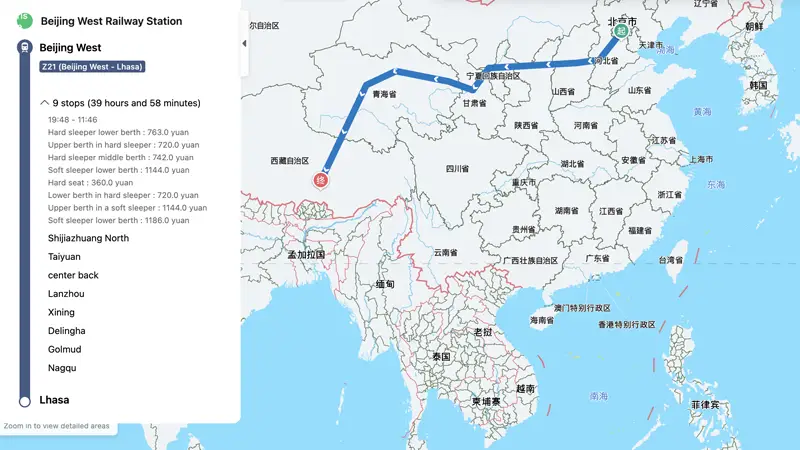
The direct service leaves Beijing West Railway Station and travels west across China before continuing onto the Qinghai–Tibet Railway.
The complete journey takes about 40 hours. You spend two nights on the train, with the landscape changing gradually as you move from northern China toward the Tibetan Plateau.
That is the main attraction. You are not simply getting from Beijing to Lhasa as quickly as possible. The railway journey becomes part of the trip.
At the same time, 40 hours is a long time to spend on a train. If you sleep well on trains and enjoy watching the scenery, you may love it. If you are uncomfortable sleeping on trains, the second night can feel quite long.
Beijing to Lhasa Train Time
The direct Beijing–Lhasa journey takes approximately 40 hours, although the exact timetable should be checked for your departure date.
The train is a conventional long-distance service, not a high-speed bullet train. You may see searches for “Beijing to Tibet high-speed train” or “Beijing to Lhasa bullet train”, but the direct Beijing–Lhasa service is not a high-speed train.
The interesting part is the route itself. After leaving Beijing, the train travels west through northern China before reaching Xining. From there, it continues toward Golmud and across the Qinghai–Tibet Plateau.
Beijing to Lhasa Train Tickets
For a journey of around 40 hours, I recommend booking a sleeper rather than a hard seat.
The usual accommodation categories include hard seat, hard sleeper and soft sleeper. Exact fares and availability depend on the current railway timetable and ticketing system.
For this length of journey, my preference would be:
Soft sleeper → hard sleeper → hard seat
If soft sleeper tickets are unavailable, a hard sleeper is still much more practical than sitting for two nights.
When Should You Plan the Beijing–Lhasa Train?
Beijing–Lhasa trains can be popular during busy travel periods and Chinese public holidays. Tickets can therefore require some planning.
There is also an important Tibet-specific consideration: your train journey needs to fit your Tibet itinerary and travel documentation.
I would decide the Tibet route first and then work backward to the train date. This is particularly useful if you are planning Everest Base Camp or another destination that requires a longer itinerary.
That way, you are not trying to make your Tibet itinerary fit around a train ticket that you have already purchased.
What Is the Beijing–Lhasa Train Journey Like?
The scenery changes gradually rather than all at once.
You leave the dense urban environment of Beijing and travel west through increasingly open landscapes. After Xining, the train enters the Qinghai–Tibet Railway section, where the scenery becomes much more characteristic of the high plateau.
You may see grasslands, mountains, rivers and wide open valleys from the train window.
For railway enthusiasts and travelers who enjoy slow travel, this is probably the strongest reason to choose the train.
What About Taking the Train from Xining?
If the main reason you want to take a train is to experience the Qinghai–Tibet Railway, you do not necessarily have to spend the entire journey traveling from Beijing.
You can travel from Beijing to Xining first and then continue to Lhasa by train. The Xining–Lhasa section is much shorter and includes the most distinctive part of the Qinghai–Tibet Railway.
This can be useful for travelers who want the plateau railway experience but would rather not spend around 40 hours traveling from Beijing.
Flying from Beijing to Lhasa
Flying is the most time-efficient way to start a Tibet trip from Beijing.
A direct Beijing–Lhasa flight generally takes around four to five hours, although the exact schedule and flight time depend on the service and travel date.
There are also connecting flights, but the total journey can be considerably longer.
Beijing to Lhasa Flight Time
A direct flight normally takes around 4–5 hours.
That makes flying particularly useful if you want to use your available days for Tibet rather than transportation.
For example, if you have around 10–12 days and want to combine Lhasa with Yamdrok Lake, Shigatse and Everest Base Camp, saving several days of railway travel can make a significant difference to the itinerary.
How to Compare Beijing–Lhasa Flights
Do not compare flights by price alone.
When looking at different services, check:
- Total price
- Whether the flight is direct
- Total travel time
- Departure and arrival times
A connecting flight may look cheaper but turn a four-hour journey into a 15- or 20-hour trip. If the price difference is small, I would normally value the saved time more highly.
How Many Days Do You Need for a Tibet Trip from Beijing?
The answer depends on what you want to see in Tibet, but for a first visit I would allow at least 8–10 days for Tibet itself.
This is separate from the time you want to spend sightseeing in Beijing or traveling elsewhere in China.
| Available time | What it can reasonably include |
|---|---|
| 7–9 days | Lhasa, Yamdrok Lake, Shigatse, and Namtso |
| 10–15 days | Longer routes such as western Tibet can be considered |
These are planning ranges rather than fixed tour lengths. Road conditions, permit requirements and the destinations you choose can all affect the final itinerary.
The main thing I would avoid is trying to fit too many distant places into a short trip simply because they look close together on a map.
Plan Acclimatization After Arriving in Lhasa
Altitude deserves its own place in your itinerary, especially if you fly directly from Beijing.
Beijing is close to sea level, while Lhasa is around 3,650 meters. Destinations such as the Everest region are higher still.
For that reason, your first day in Lhasa should not be treated like an ordinary sightseeing day.
After arriving, I would keep the schedule light:
- Check into your hotel
- Eat a simple meal
- Drink enough water
- Rest
- Take only a short walk if you feel comfortable
You do not need to fill every hour.
If you feel well the following day, you can gradually begin sightseeing in Lhasa before continuing to higher destinations.
Taking the train may mean a more gradual change in elevation during the journey, but it does not guarantee that you will avoid altitude sickness. Your Tibet itinerary still needs appropriate acclimatization.
What Can You See After Arriving in Lhasa?
Once your arrival and acclimatization days are planned, the next decision is how far you want to travel inside Tibet.
Lhasa
For a first visit, allow time for the major sights rather than treating Lhasa as a quick overnight stop.
Potala Palace, Jokhang Temple and the Barkhor area are central to understanding the city, but simply walking around Lhasa is also part of the experience.
Yamdrok Lake
Yamdrok Lake is a practical addition to a shorter itinerary because it can be visited as a day trip from Lhasa or incorporated into a longer overland route.
Shigatse
Shigatse is commonly included when travelers continue west toward Everest. The journey also gives you a chance to experience more of the Tibetan Plateau outside Lhasa.
Everest Base Camp
Everest Base Camp requires more time than a simple Lhasa trip. The route involves long overland travel and higher elevations, so it should be planned after sufficient acclimatization.
Namtso and Western Tibet
Namtso and western Tibet require additional time and should not simply be added to a short itinerary. If you want to travel as far as Mount Kailash, plan for a substantially longer trip.
Tibet Travel Permit for a Beijing to Tibet Trip
Foreign travelers need the required Tibet travel documentation before entering the Tibet Autonomous Region.
The Tibet Travel Permit is an important part of planning a Beijing–Tibet journey. It is not something you should leave until after arriving in Beijing.
Your destination also affects the documentation required. Travel toward Kailash, western Tibet or certain border areas can involve additional permits and travel requirements.
This is why I recommend deciding your Tibet route before finalizing every part of your transport.
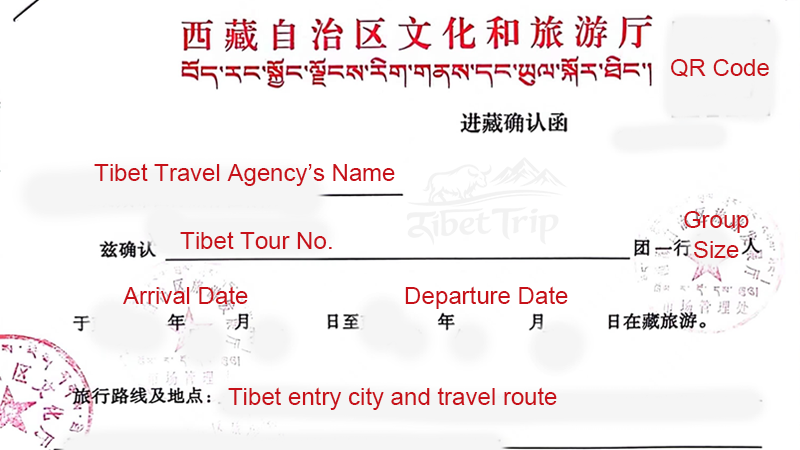
TibetTrip can help you understand the route, explain the applicable travel requirements and coordinate your enquiry with a licensed Tibet operating partner. The licensed operating partner handles the actual Tibet tour operation, required permits, transportation and other on-the-ground arrangements.
TibetTrip itself is a trip-planning resource rather than the licensed ground operator.
Can Foreigners Travel Independently from Beijing to Tibet?
Traveling to Tibet is different from traveling independently around other parts of Chinese Mainland.
Foreign travelers entering the Tibet Autonomous Region need to follow the applicable Tibet travel regulations and organized travel requirements.
This means that a Beijing–Lhasa train or flight ticket is only one part of the journey. Your Tibet itinerary, required documentation and travel arrangements also need to be coordinated.
For this reason, I would decide your Tibet route before buying every non-refundable transport ticket whenever possible.
You do not want to discover after purchasing a train ticket that the arrival date does not work well with the Tibet itinerary you actually want.
How Far Is Tibet from Beijing?
You may see searches for “Beijing to Tibet distance” or “Beijing to Lhasa distance”, but the more useful question for trip planning is usually Beijing to Lhasa.
Tibet is a large region rather than a single destination. Lhasa is the main starting point for many first-time visitors, and from there you may continue toward Shigatse, Everest Base Camp, Namtso or western Tibet.
As a result, the total distance you travel during your Tibet trip can be much greater than the distance between Beijing and Lhasa.
This is why I recommend planning according to travel time and route rather than looking only at the map.
A Practical Order for Planning Your Beijing–Tibet Trip
If I were planning this journey, I would work through the decisions in this order.
1. Decide Your Total Travel Time
First separate your Beijing sightseeing days from the time you have available for Tibet.
This immediately tells you whether spending two nights on a train makes sense.
2. Decide What You Want to See in Tibet
Choose the main destinations before fixing the transport between Beijing and Lhasa.
For example, Lhasa alone requires a very different amount of time from Lhasa plus Everest or western Tibet.
3. Build in Acclimatization
Place your lower-altitude sightseeing and rest time before the highest parts of the journey.
Do not make Everest or another high-altitude destination the first major stop after arriving in Lhasa.
4. Check the Required Travel Documents
Once your route is clear, check which Tibet travel documents and permits apply to your itinerary.
5. Choose the Beijing–Lhasa Transport
Now decide whether the train or flight fits the itinerary you have built.
If you choose the train, check the actual railway schedule and ticket availability for your date. If you choose a flight, compare direct and connecting services by total travel time as well as price.
6. Leave Some Buffer Time
I would avoid making your international flight or another important connection depend on a very tight train or road schedule.
A little flexibility is useful when traveling in Tibet, where long road journeys and changing conditions can affect the pace of a trip.
Train or Flight: What Would I Choose?
If I had only 7–10 days for the whole Tibet part of the trip, I would fly.
Not because the train is a bad option, but because I would rather use those extra days in Tibet.
If I had two weeks or more and genuinely enjoyed long-distance train travel, I would consider taking the train at least once.
There is also a middle ground: take the train to Lhasa and fly back. That lets you experience the Qinghai–Tibet Railway without spending another 40 hours on the return journey.
For me, the important point is not to choose the “classic” option simply because other travelers recommend it. Choose the route that fits the trip you actually want to take.
Final Thoughts on Planning a Tibet Trip from Beijing
A Tibet Trip from Beijing can begin with a roughly 40-hour railway journey or a four-to-five-hour flight.
The better option depends mainly on how much time you have and whether you want the journey itself to be part of the experience.
More importantly, do not plan the Beijing–Lhasa transport in isolation. Your arrival date needs to work with your Tibet itinerary, acclimatization, permits and the destinations you want to visit.
If you are unsure where to start, TibetTrip can help you compare the practical route options, explain the differences between train and flight, review your itinerary and coordinate your enquiry with a licensed Tibet operating partner.
You can start with something as simple as:
“I have 12 days, I am starting in Beijing, and I want to visit Everest.”
From there, the route can be worked out before you commit to the transport.
FAQs on a Tibet Trip from Beijing
How do I get to Tibet from Beijing?
The two main options are the direct Beijing–Lhasa train and flights from Beijing to Lhasa. The train takes about 40 hours, while a direct flight generally takes around four to five hours.
How long is the train from Beijing to Lhasa?
The direct Beijing–Lhasa train takes approximately 40 hours. Check the current railway timetable for your travel date because schedules can change.
Is there a direct train from Beijing to Lhasa?
Yes. Beijing has a direct train service to Lhasa, departing from Beijing West Railway Station.
Is there a high-speed train from Beijing to Tibet?
No. The direct Beijing–Lhasa service is a conventional long-distance train rather than a high-speed bullet train.
What type of Beijing–Lhasa train ticket should I buy?
For a journey of around 40 hours, I recommend a sleeper. Soft sleeper is the most comfortable of the usual options, while hard sleeper is a practical alternative if soft sleeper is unavailable.
How long is the flight from Beijing to Lhasa?
A direct Beijing–Lhasa flight generally takes around four to five hours, although the exact time depends on the flight and operating schedule.
Are there direct flights from Beijing to Lhasa?
Direct flights are available on some schedules. Connecting flights are also available, so check the total journey time before choosing a ticket.
Is it better to fly or take the train from Beijing to Tibet?
If your trip is short, flying usually makes better use of your time. If you have more time and enjoy railway travel, the train offers a different experience and lets you see the landscape change as you travel toward the Tibetan Plateau.
Is the Beijing–Lhasa train good for acclimatization?
The train provides a more gradual journey toward higher elevations, but it does not guarantee protection from altitude sickness. You should still allow proper acclimatization after arriving in Lhasa.
How many days do I need for a Tibet Trip from Beijing?
For a first visit, I recommend allowing at least 8–10 days for Tibet itself. Everest Base Camp, Namtso and western Tibet require additional time.
Do I need a Tibet Travel Permit if I travel from Beijing?
Yes. Foreign travelers need the required Tibet travel documentation before entering the Tibet Autonomous Region. Additional permits may apply depending on your destination.
Can foreigners travel independently from Beijing to Lhasa?
Foreign travelers need to follow the applicable Tibet travel regulations and organized travel requirements. A Beijing–Lhasa train or flight ticket alone is not the complete Tibet travel arrangement.
Can I visit Everest Base Camp after traveling from Beijing to Lhasa?
Yes. Everest Base Camp can be included in a Tibet itinerary starting from Beijing. Allow enough time in Lhasa for acclimatization before continuing toward the higher Everest region.
Can I take the Beijing–Lhasa train and fly back?
Yes. Taking the train to Lhasa and flying back is a useful option if you want to experience the Qinghai–Tibet Railway without spending another 40 hours on the return journey.