
If you are a foreign traveler planning to visit Tibet, the first things you probably want to know are simple: Can I go? What documents do I need? Can I travel independently? How do I enter Tibet? And how many days should I plan?
Yes, foreign travelers can visit Tibet in 2026. However, Tibet travel is different from traveling independently in most parts of China. You need to meet China’s entry requirements, arrange the required Tibet travel authorization in advance, and travel through an organized itinerary with a licensed guide. The exact requirements can vary according to your nationality, entry route and destinations.
I’m Metok, a Tibetan born and raised in Tibet. I help foreign travelers understand how Tibet travel works before they book, from choosing an entry route and building a realistic itinerary to understanding permits, altitude and travel conditions.
My approach is simple: give you the practical information first, explain the restrictions honestly, and help you choose a Tibet trip that works in reality, not just on paper.
This guide focuses on what foreign travelers actually need to know before planning a Tibet trip in 2026.
Can Foreigners Travel to Tibet in 2026?
Yes. Foreign travelers can visit Tibet, but they cannot treat Tibet like an ordinary independent travel destination.
For most foreign travelers, three things need to be considered separately:
- Your passport and permission to enter China
- Your Tibet Travel Permit
- Additional permits or travel authorizations for certain restricted areas
Having permission to enter China does not automatically give you permission to travel to Tibet.
Likewise, having a Tibet Travel Permit does not replace your Chinese visa or other China entry requirements.
Your nationality, entry route and itinerary all matter. For that reason, it is better to confirm the requirements for your specific trip rather than rely on a general rule found online.
What Documents Do Foreign Travelers Need for Tibet?
The easiest way to understand the paperwork is to separate China entry requirements from Tibet travel requirements.
| Requirement | What it is for |
|---|---|
| Valid passport | International identification and travel |
| Chinese visa or visa-free eligibility | Entry into China, depending on your nationality and the policy in effect when you travel |
| Tibet Travel Permit | Required for foreign travelers visiting Tibet |
| Aliens’ Travel Permit | Required for certain restricted areas |
| Military Area Entry Permit | Required for some border and military-sensitive areas |
Not every traveler needs every permit.
For example, a normal Lhasa trip may only involve the Tibet Travel Permit in addition to your China entry documents. A trip to Mount Kailash and western Tibet requires additional permits because the route enters more restricted areas.
Your travel operator should confirm the exact permits required for your itinerary before you travel.
What Is the Tibet Travel Permit?
The Tibet Travel Permit is the main travel authorization foreign visitors need for a trip to Tibet.
Foreign travelers cannot simply arrive in Lhasa and apply for it at the airport.
The permit is arranged in advance through an authorized Tibet travel operator. Your passport information and travel itinerary are normally required as part of the application process.
When Should You Arrange the Tibet Travel Permit?
Do not leave the permit process until the last minute.
Processing time can vary depending on the itinerary, travel season and current administrative procedures. More complicated trips, such as Mount Kailash or other restricted-area routes, can require additional preparation.
For that reason, I recommend discussing your Tibet itinerary and documents with your travel operator well before your intended departure date.
The earlier you confirm your route, the more flexibility you have if your itinerary, entry city or travel dates need to change.
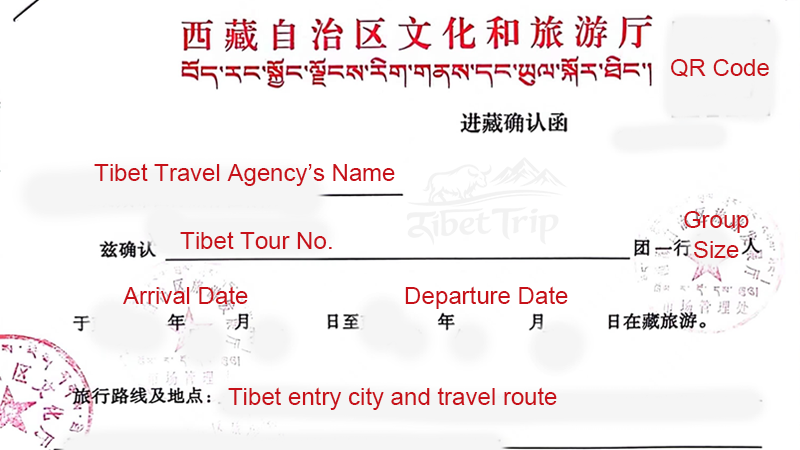
Do I Need a Chinese Visa to Visit Tibet?
It depends on your nationality and the China entry policy in effect when you travel.
Some nationalities may be eligible for visa-free entry under the policy applicable to their trip, while others need a Chinese visa.
The important distinction is:
Chinese visa or visa-free eligibility = permission to enter China.
Tibet Travel Permit = travel authorization required for foreign travelers visiting Tibet.
One does not replace the other.
Whether you are entering Tibet from Chinese Mainland or Nepal, make sure your Tibet travel authorization is arranged before you travel toward Tibet.
Can Foreigners Travel Independently in Tibet?
Generally, foreign travelers cannot travel independently in Tibet in the same way they can in many other destinations in China.
Your Tibet trip needs to be organized through an authorized travel arrangement, and foreign travelers need to travel with a licensed guide according to the approved itinerary.
This does not mean that you have to join a large bus group.
- Private Tibet tours
- Small-group tours
- Customized itineraries
- Fixed-route group tours
The important part is not the size of your group. It is that the trip is properly arranged and the required travel documents are in place.
How Can Foreigners Enter Tibet?
1. Enter Tibet from Chinese Mainland
This is the most common choice for travelers who are already visiting China.
You can reach Lhasa by:
- Flight
- Tibet train
- A combination of train and flight
Popular train routes include Beijing–Lhasa, Shanghai–Lhasa, Guangzhou–Lhasa, Chengdu–Lhasa and Xining–Lhasa.
For travelers who want to experience the Qinghai–Tibet Railway, Xining is one of the most practical starting points because the train journey to Lhasa is much shorter than the long-distance services from eastern China.
Read our Tibet train guides if you are deciding between flying and taking the train.
2. Enter Tibet from Nepal
Travelers coming from Nepal can enter Tibet by air or through the Nepal–Tibet land border, depending on the route and current border arrangements.
This option is particularly useful if your larger trip combines:
Nepal → Tibet → Chinese Mainland
or
Chinese Mainland → Tibet → Nepal
The border process can differ from entering Tibet from Chinese Mainland, so do not assume that the same documents and procedures apply to both routes.
Which Entry Route Is Better?
There is no single best route. It depends on what you want from the trip.
| Your priority | Route worth considering |
|---|---|
| First Tibet trip | Chinese Mainland → Lhasa |
| Want a gradual high-altitude itinerary | Chinese Mainland → Lhasa |
| Want to experience the Tibet train | Chinese Mainland → Lhasa by train |
| Already traveling in Nepal | Nepal → Tibet |
| Want Everest + Nepal in one trip | Tibet → Nepal |
| Want Kailash from Nepal | Nepal → Tibet, subject to current entry and border arrangements |
If altitude is a concern, I generally prefer a route that gives travelers time to acclimatize rather than taking them rapidly from a much lower elevation to very high areas.
How Many Days Do You Need in Tibet?
There is no perfect number of days, but I would not recommend trying to see all of Tibet in one short trip.
| Trip length | What you can realistically do |
|---|---|
| 5–6 days | Lhasa and nearby cultural sites |
| 7–9 days | Lhasa + Yamdrok Lake + Shigatse or Everest |
| 10–12 days | Lhasa + Shigatse + Everest, with more time on the road |
| 12–15+ days | Everest + Kailash or a longer western Tibet route |
| 15+ days | More remote areas and a slower itinerary |
If this is your first visit, I would rather see you spend one extra day acclimatizing in Lhasa than squeeze another sightseeing stop into the itinerary.
Tibet is a place where travel time matters.
A destination that looks close on a map can take much longer by road because of altitude, mountain passes, road conditions and scheduled stops.
A good itinerary should leave enough time for the journey itself rather than treating every transfer as empty space between attractions.
Where Should First-Time Foreign Travelers Go?
You do not need to visit everything.
For a first trip, I would divide Tibet into several practical travel regions.
| Region | Best for | Typical role in a trip |
|---|---|---|
| Lhasa | Tibetan culture, temples, history | Essential first stop |
| Yamdrok Lake | Sacred lake and mountain scenery | Lhasa day/route excursion |
| Shigatse | Monasteries and Everest route | Useful stop for western Tibet |
| Everest Base Camp | Mountain views and high-altitude scenery | 3–5 additional days |
| Namtso | High-altitude lake scenery | Optional after acclimatization |
| Nyingchi | Forests, rivers and spring blossoms | Different side of Tibet |
| Shannan | Early Tibetan history | Cultural extension |
| Ngari / Kailash | Pilgrimage and remote western Tibet | Long, demanding journey |
For most first-time visitors, I would start with Lhasa rather than immediately chasing the most remote destinations.
Lhasa gives you time to adjust to the altitude while introducing you to Tibetan culture.
When Is the Best Time to Visit Tibet?
There is no single “best month” for the whole of Tibet.
The right season depends on what you want to see.
| Travel goal | Period worth considering |
|---|---|
| First-time Lhasa trip | Spring to autumn |
| Everest views | Generally late spring through autumn |
| Nyingchi peach blossoms | March–April, depending on bloom conditions |
| Autumn scenery | September–October |
| Kailash pilgrimage | Generally the warmer travel season, subject to current route conditions |
| Fewer visitors | Winter and shoulder seasons |
| Winter scenery | November–March, depending on destination and road conditions |
Spring
Spring is attractive for travelers interested in Nyingchi’s peach blossoms and greener landscapes.
Summer
Summer can work well for many Tibet routes, but weather varies by region. July and August should not simply be labeled “bad months.” Rain, cloud cover and road conditions can be different in southeastern Tibet, central Tibet and the western plateau.
Autumn
September and October are popular because of generally favorable visibility and cooler weather, although demand can also be higher.
Winter
Winter is often overlooked.
Lhasa can be quieter, daytime sunlight can feel surprisingly warm, and the dry plateau atmosphere can provide excellent mountain visibility. However, temperatures drop sharply at night and some high-altitude or remote routes may have seasonal limitations.
Check the current opening arrangements and road conditions for your specific destination before planning a winter trip.
Tibet Altitude: What Foreign Travelers Should Know
Altitude is one of the most important practical issues when planning Tibet.
Lhasa itself is already around 3,650 meters, and many popular destinations are considerably higher.
- Yamdrok Lake: around 4,400–4,800 m depending on the point visited
- Namtso: around 4,700 m
- Everest Base Camp area: around 5,200 m
- Mount Kailash trek: up to about 5,630 m at Drolma La
Altitude affects people differently.
Being young or physically fit does not guarantee that you will have no symptoms.
Common Symptoms of Altitude Sickness
- Headache
- Dizziness
- Fatigue
- Nausea
- Reduced appetite
- Difficulty sleeping
- Shortness of breath
Severe symptoms such as confusion, difficulty breathing at rest, persistent vomiting or worsening neurological symptoms require urgent medical attention and descent to a lower altitude.
Do not treat serious altitude symptoms as something you simply need to “push through.”
How Should You Acclimatize?
For a first Tibet trip, a gradual itinerary is usually more sensible than immediately driving to the highest destinations.
- Arrive in Lhasa.
- Keep the first day slow.
- Spend additional time in Lhasa before moving higher.
- Avoid strenuous exercise during early acclimatization.
- Tell your guide if you feel unwell.
- Follow medical advice rather than relying on internet remedies.
If you have a medical condition or are concerned about high-altitude travel, discuss the trip with your doctor before traveling.
I would not recommend treating butter tea, sweet tea, oxygen or traditional foods as medical treatment for altitude sickness.
Tibet Travel Etiquette: What Should Foreign Visitors Know?
You do not need to know every Tibetan custom before arriving.
A few basic habits make a big difference.
Around Monasteries and Temples
- Follow your guide’s instructions.
- Dress respectfully.
- Do not enter restricted areas.
- Do not touch religious objects.
- Do not photograph inside temples unless photography is permitted.
- Keep your voice low.
- Give pilgrims space.
When walking around religious sites, follow the local practice indicated by your guide rather than assuming every site follows exactly the same rules.
Around Lakes and Mountains
Do not leave rubbish behind.
Do not climb religious structures, monuments or unsafe natural formations for photographs.
Avoid treating local people, pilgrims or religious activities as photo props. Ask before taking close-up photographs of people.
What Should You Pack for Tibet?
You do not need to bring your entire house.
The most useful principle is layers.
- Warm base layers
- Fleece or sweater
- Down or insulated jacket
- Windproof outer layer
- Comfortable walking shoes
- Warm socks
- Hat and gloves
- Sunglasses
- Sunscreen
- Lip balm
- Personal medication
- Reusable water bottle
- Small daypack
- Power bank
If you are going to Everest or Kailash, add warmer clothing and prepare for much colder nights.
The temperature can change quickly between sunny daytime conditions and exposed mountain areas after sunset.
Money, Internet and Electricity in Tibet
Money
Chinese yuan (CNY/RMB) is the most useful currency to carry.
Mobile payments such as Alipay and WeChat Pay are widely used in cities, but you should still carry some cash for remote areas.
For Everest, Kailash and other long overland routes, do not assume that every small shop or guesthouse can process international cards.
Internet and SIM Cards
China’s mobile and internet environment is different from many countries.
A Chinese SIM card can be useful, especially for travelers spending several weeks in China.
Coverage is generally better in major towns than in remote western Tibet, where there can be long stretches with weak or no mobile signal.
If you depend on a particular app or service, check its availability in China before your trip rather than assuming it will work normally.
Electricity
Tibet uses the same general electrical system as Chinese Mainland:
220V / 50Hz
Plug compatibility can vary depending on the device you bring, so an international adapter is useful.
What Food Can Foreign Travelers Expect?
In Lhasa and larger towns, you will find much more than Tibetan food.
- Tibetan food
- Chinese food
- Noodles
- Rice dishes
- Hotpot
- Vegetarian options
- Western-style food in some tourist areas
If you want to try local dishes, start with simple foods such as:
Tsampa
Roasted barley flour traditionally mixed with butter tea or other ingredients.
Tibetan Butter Tea
A salty tea traditionally made with butter.
Yak Meat
Commonly served in hotpot or other cooked dishes.
Tibetan Momo
A dumpling-style food that can be filled with meat or vegetables.
Food choices become more limited as you travel farther from Lhasa and other major towns, particularly on remote Everest and Kailash routes.
Everest or Kailash: Which Is Better for a First Tibet Trip?
They are very different journeys.
| Everest Base Camp | Mount Kailash |
|---|---|
| Mountain scenery | Pilgrimage and sacred landscape |
| Easier physically than the Kailash kora | Physically demanding |
| Usually shorter | Usually longer |
| Suitable for travelers focused on Everest | Better for travelers specifically interested in Kailash |
| High altitude | Very high altitude |
| No multi-day kora required | 3-day kora for the standard pilgrimage route |
If your dream is simply to see Mount Everest, choose Everest.
If Mount Kailash has personal, religious or cultural significance to you, plan specifically for Kailash rather than treating it as another sightseeing stop.
For Kailash, additional permits and much more careful logistical planning are required.
How Should You Choose a Tibet Tour?
This is one area where I encourage travelers to look beyond the headline price.
1. Who Actually Operates the Tour?
Find out who is responsible for operating your trip on the ground, who handles the permits, and who will be your actual guide and transportation provider.
You should know who is helping you plan and who is responsible for operating the trip.
2. What Is Included?
Check:
- Hotels
- Transportation
- Guide
- Meals
- Entrance fees
- Permits
- Airport or train station transfers
- Border procedures where applicable
- Oxygen arrangements where relevant
3. What Happens If Something Changes?
Ask what happens if:
- A train ticket is unavailable
- A flight changes
- A road is temporarily closed
- A hotel is unavailable
- Weather affects the itinerary
- You need to change the route
A good operator should explain the practical backup plan rather than simply saying “everything is guaranteed.”
4. Is the Itinerary Realistic?
A cheap itinerary is not always a good itinerary.
If it puts you at very high altitude too quickly or requires extremely long driving days back-to-back, the lower price may come at the expense of comfort.
The best itinerary is not necessarily the one with the most destinations. It is the one that works realistically with your available time, altitude and road conditions.
How Much Does Tibet Travel Cost for Foreigners?
There is no single price for a Tibet trip. The total cost depends on the route, number of travelers, hotel category, season, transportation and whether you choose a private or group tour.
Remote routes such as Everest and Mount Kailash generally cost more because they require longer overland transportation, additional permits, remote-area accommodation and more complicated logistics.
Private tours usually cost more per person than group tours, while joining a group can reduce the cost of vehicles and guides.
When comparing prices, do not compare only the headline number. Check what is actually included, especially permits, transportation, hotels, entrance fees and transfers.
A very low price can sometimes mean that important costs are excluded rather than that the same trip is simply cheaper.
Can I Customize a Tibet Tour?
Yes, foreign travelers can usually customize a Tibet itinerary around their available time, interests and entry route, subject to the travel requirements and permits for the destinations involved.
For example, you might combine:
- Lhasa + Yamdrok Lake
- Lhasa + Everest Base Camp + Namtso
- Lhasa + Everest + Nepal
- Lhasa + Namtso
- Lhasa + Nyingchi
- Everest + Mount Kailash
However, customization does not mean adding unlimited destinations to a short itinerary.
Altitude, road distance, opening conditions and required permits all need to be considered.
This is why I prefer to adjust the itinerary around what is realistically possible, rather than simply adding more places because they look attractive on a map.
How TibetTrip Helps Foreign Travelers
TibetTrip is a Tibet travel specialist led by a Tibetan born and raised in Tibet.
My role is to help foreign travelers understand, plan and coordinate a Tibet journey before they commit to it.
I regularly help travelers think through practical questions such as:
- Which entry route makes sense for their trip
- How many days the itinerary realistically needs
- Which permits are required
- How to combine destinations without making the route unnecessarily rushed
- How altitude affects the itinerary
- Whether Everest or Kailash is the better fit
- Whether train or flight entry makes more sense
- What to expect from hotels, roads and remote areas
- What questions to ask before booking
- What practical alternatives are available if travel arrangements change
We coordinate the trip with our licensed local operating partner, who handles the on-the-ground tour operation, including the arrangements required for your itinerary.
Before you book, you should know what is being planned, who is operating the trip and what is included.
My goal is not to make Tibet sound perfect.
It is to help you understand what the journey will actually be like, so you can decide whether it is right for you.
How Far in Advance Should I Book a Tibet Tour?
There is no single booking deadline that works for every Tibet trip.
For a simple Lhasa itinerary, planning several weeks ahead may be sufficient in some periods. More complicated journeys involving Everest, Mount Kailash, border areas or specific train and flight arrangements are better planned earlier.
Peak travel periods can also require more advance planning because accommodation, transportation and available tour arrangements can become more limited.
If you already know your approximate dates, it is better to discuss your route early rather than wait until every detail is fixed.
Early planning gives you more options if your preferred train, hotel or itinerary is not available.
Common Questions About Tibet Travel for Foreigners
Can foreigners visit Tibet in 2026?
Yes. Foreign travelers can visit Tibet, subject to China’s entry rules and Tibet’s travel requirements. A Tibet Travel Permit and organized travel arrangements are required for foreign visitors.
Can I travel around Tibet independently?
Foreign travelers generally cannot travel independently in Tibet. Travel needs to be arranged through an authorized tourism operator with a licensed guide.
Can I apply for the Tibet Travel Permit myself?
No. Foreign travelers normally arrange the Tibet Travel Permit through an authorized Tibet travel operator.
Does a Chinese visa automatically allow me to enter Tibet?
No. A Chinese visa concerns entry into China. Foreign travelers also need the required Tibet travel authorization.
Can I enter Tibet from Nepal?
Yes, depending on the current border and entry arrangements. Nepal is a common starting point for travelers combining Tibet with Nepal, Everest or Kailash.
Can I take the train to Tibet?
Yes. The Qinghai–Tibet Railway connects Lhasa with several major Chinese cities through different train services.
Is Tibet safe for foreign travelers?
Tibet is generally a well-organized destination for travelers who follow the required travel arrangements and local regulations. The more important practical concerns are altitude, long driving distances, weather and the remoteness of some destinations.
Is Tibet suitable for older travelers?
Age alone does not determine whether Tibet is suitable. Fitness, existing medical conditions, altitude tolerance and itinerary design matter more. A slower itinerary with adequate acclimatization is usually preferable to a rushed itinerary.
Can children travel to Tibet?
Children can travel to Tibet, but families should consider altitude, travel time, temperature and access to medical care before choosing a route. Everest and Kailash require more careful planning than a Lhasa-focused trip.
How long should I stay in Lhasa before going to Everest?
There is no single rule that works for everyone, but allowing time in Lhasa before moving to higher destinations is a sensible way to structure a first Tibet trip.
What is the best month to visit Tibet?
It depends on your destination and travel goals. Spring and autumn are popular for many travelers, while winter can offer fewer crowds and different scenery. Everest, Nyingchi and Kailash each have their own seasonal considerations.
Is Tibet expensive for foreign travelers?
It depends on the route, group size, hotel category, season and whether you choose a private or group tour. Remote destinations such as Everest and Kailash generally cost more because of transportation, accommodation and permit requirements.
Should I choose Everest or Mount Kailash?
Choose Everest if your priority is mountain scenery and seeing the world’s highest peak. Choose Kailash if the pilgrimage and sacred landscape are the main reason you want to visit western Tibet.
How far in advance should I book a Tibet tour?
It depends on your route and travel season. More complicated itineraries involving Everest, Mount Kailash, border areas or specific train arrangements are better planned earlier. If you already know your approximate dates, it is worth discussing your route in advance.
Can I customize my Tibet tour?
Yes. Private and customized Tibet itineraries can usually be adjusted around your available time, interests and entry route, subject to the permits, travel regulations and road conditions for your chosen destinations.
How much does a Tibet tour cost for foreigners?
The cost depends on the route, group size, hotel category, season and transportation. Remote destinations such as Everest and Kailash generally cost more because of longer travel distances and more complicated logistics. Always check exactly what is included before comparing tour prices.
Before You Book Your Tibet Trip
You do not need to have every detail figured out before contacting a Tibet travel specialist.
At minimum, it helps to know:
- Your nationality
- Your intended travel dates
- Where you will enter Tibet from
- How many days you have
- Whether you want Lhasa, Everest, Kailash, Nyingchi or another region
- Whether you prefer a private or group trip
- Your approximate budget
From there, the route can be adjusted around the realities of altitude, road distance, permits and available travel time.
Not Sure Which Tibet Route Is Right for You?
I can help you check whether the route is realistic, what permits you may need, how much time you should allow for acclimatization, and whether Everest, Kailash, Nyingchi or a Lhasa-focused trip is the better fit.
You do not need to have your entire itinerary finished before asking.
Let’s work out what makes sense before you book.
Ask Metok About Your Tibet Trip
TibetTrip — More Than a Trip. Discover Real Tibet.