Tibet Everest Base Camp Tour 2026

Discover the Pinnacle of the World: Your Ultimate 2026 Tibet Everest Base Camp Adventure Starts Here.

The 2026 Tibet Everest Base Camp Tour is the ultimate pilgrimage for nature lovers and adventure seekers. Whether you start your soul-stirring journey from the holy city of Lhasa or embark on a trans-Himalayan adventure from Kathmandu, this trip takes you across the high-altitude Tibetan plateau, passing through turquoise lakes and ancient glaciers, until you stand face-to-face with the North Face of Mt. Everest (8848.86m).

Our 2026 itinerary is specially designed to capture the “Big Four” Everest landmarks that no traveler should miss. You will cross the high-altitude Gyatso La Pass for your first glimpse of the peak, conquer the legendary Zigzag Road (the 108 Bends), and stand at the world-famous Gawu La Pass to witness a panoramic view of five 8,000m+ peaks. The journey culminates at the iconic Everest Base Camp, where the world’s highest summit feels close enough to touch.

Unlike the trek on the Nepal side, the Tibet EBC tour offers a paved road all the way to the base of the world’s highest peak, making it accessible for travelers of all ages. In 2026, we continue to refine this classic route, blending deep Tibetan cultural immersion with the raw, breathtaking power of the Himalayas.

Top 3 Tibet Everest Base Camp Group Tour Packages

Discover our most popular, time-tested routes designed for the 2026 season. Whether you wish to begin your journey in the spiritual heart of Lhasa or cross the majestic Himalayas from Kathmandu, these expertly crafted itineraries offer the perfect balance of high-altitude adventure and cultural immersion. Choose your path below to stand before the world’s highest peak.

What Sets Our 2026 Everest Base Camp Tour Apart?

Scientific Acclimatization & Safety:
Our EBC tour pace features 3 days in Lhasa (2 days in Gyirong) and strategic stops to minimize AMS. We provide daily health monitoring and on-board medical oxygen for every group.

The “Big Four” Viewing Guarantee:
We ensure dedicated time for the “perfect shot” at Gyatso La Pass, the legendary 108 Bends (Zigzag Road), the 5-peak panorama at Gawu La Pass, and the EBC Monument.

100% Permit & Visa Success:
We handle all 2026 paperwork, including Tibet Travel Permits and Military Permits. For guests from Kathmandu, we provide full-service handling of the Chinese Group Visa.

Authentic Everest Stays:
Experience a night at the foot of the world in an upgraded Black Yak-hair Tent or the Rongbuk Guesthouse. Warm up with our exclusive Everest Yak Hotpot—a must-try at 5,200m.

100% Local Tibetan Guides:
Gain deep cultural insights at Rongbuk Monastery and beyond. Our guides don’t just show you the mountain; they share the spiritual heart and nomadic traditions of their homeland.

Reliable Transport & Expert Drivers:
We use late-model, high-performance vehicles maintained for mountain terrain, driven by local Tibetan experts who have navigated the Friendship Highway for decades.

Top 20 FAQs on Tibet Everest Base Camp Tour 2026

Planning a journey to the foot of the world’s highest peak involves complex logistics. From the latest 2026 permit regulations to the specifics of sleeping at 5,200 meters, we have compiled these detailed answers to help you prepare for every aspect of your Tibet Everest adventure.

1. Tibet Everest Hotel & Accommodation: EBC Tent Hotel vs. Rongbuk Hotel vs. Rongbuk Monastery Guesthouse

Staying at 5,200m doesn’t mean sacrificing all comfort. For the 2026 season, the accommodation at Tibet Everest Base Camp has been significantly upgraded, offering two distinct and cozy ways to experience the night sky under the North Face.

Option 1: Upgraded Everest Base Camp Tent Hotels (Authentic & Modern)

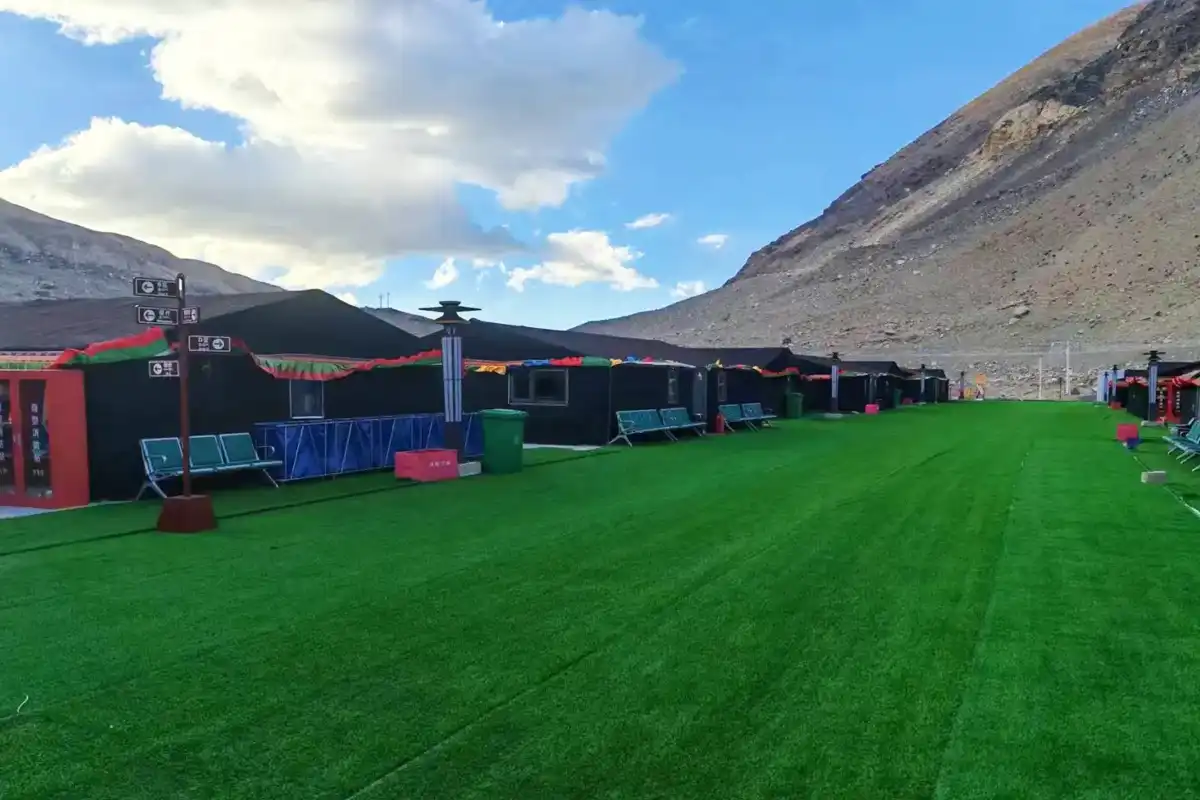
These are traditional “Black Yak-hair Tents” run by local Tibetan nomad families (available from April to October).

Previous inside conditions: Each tent accommodated 6-10 people. They were equipped with a central stove burning yak dung (clean and odorless) for warmth, communal sleeping platforms with thick blankets, and basic charging ports. There were no running water or showers at the camp. Facilities were limited to public squat toilets outside the tents.

Forget the crowded tents of the past. The 54 newly-upgraded tent hotels now offer a boutique nomad experience:

  • Privacy & Layout: Each large tent is now partitioned into private rooms (Single, Double, or Twin), ensuring a quiet space for every traveler.
  • Modern Comforts: Every tent features a cozy lounge with comfortable sofas for socializing, a hot-water dispenser, and even a humidifier to combat the dry mountain air.
  • Thoughtful Amenities: You will find freshly changed bedding, electric blankets, slippers, and disposable toiletries. Best of all, free Wi-Fi and charging ports are available in your room so you can share your Everest photos instantly.
Black Yak-hair Everest Base Camp Tent Hotels
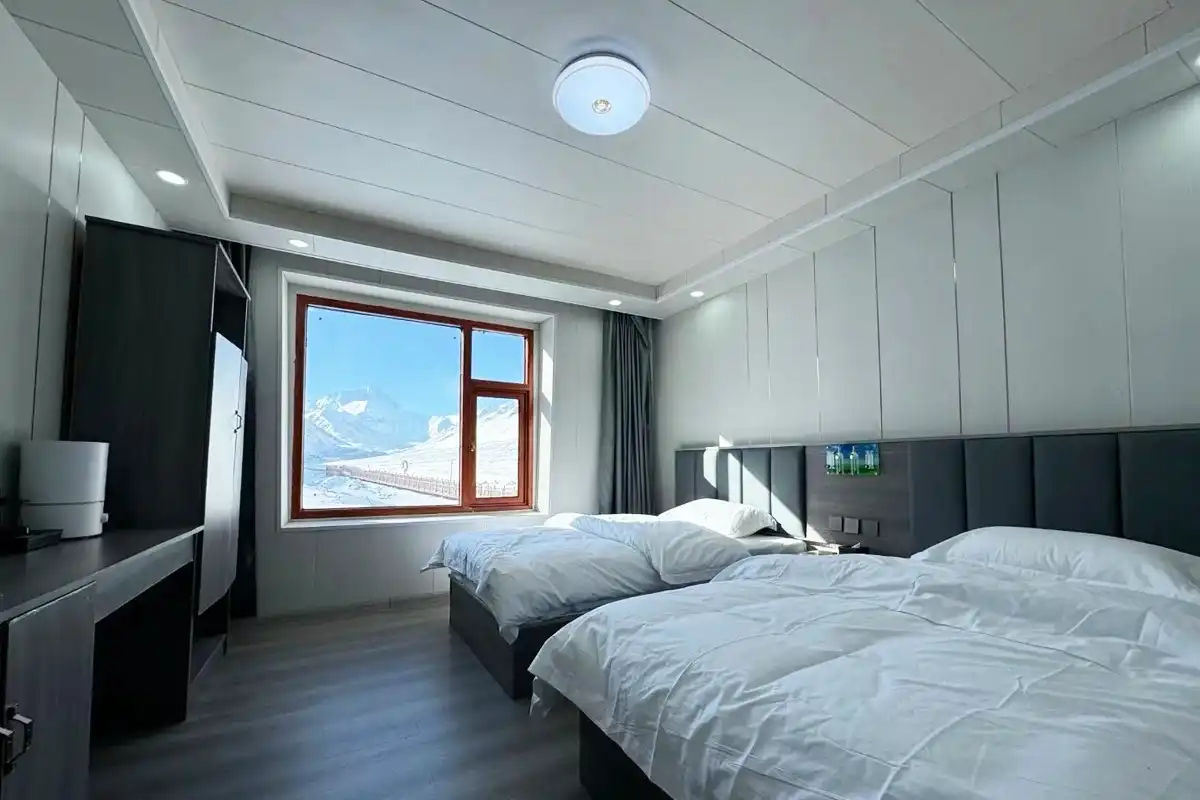
Rongbuk Hotel, the most luxury hotel at Everest Base Camp


Option 2: Rongbuk Hotel (The “Luxury” of the Highlands)

The Rongbuk Hotel (Rongbu Lvguan) is the only fixed-structure hotel near the base camp and is open year-round (even in winter when tents are removed). Located right near the world’s highest monastery, the Rongbuk Hotel is the premier choice for those seeking more traditional hotel amenities:

  • Superior Facilities: Enjoy underfloor heating, private Western-style toilets, and running water in your room.
  • Dining with a View: The hotel’s restaurant offers an epic direct view of Everest. Here, you can savor our signature Tibetan Yak Hotpot or a hearty Chinese breakfast while watching the sunrise.
  • Expert Tip: With only 25 rooms available year-round, these sell out months in advance as it is the most popular choice for sunrise & sunset views. We provide priority booking for our guests to secure this “luxury” at the foot of the world.

Option 3: Rongbuk Monastery Guesthouse (Spiritual & Iconic)

For those who want to stay at the very doorstep of the world’s highest spiritual sanctuary, this guesthouse offers a truly unique atmosphere.

  • The Experience: Located right next to the Rongbuk Monastery and only 8km from the summit, you will wake up to the sound of chanting monks and the sight of Everest towering over the monastery’s white stupa—one of the most iconic views in the world. It is a profoundly spiritual experience that compensates for the lack of luxury.
  • Facilities: This is the most rustic and authentic option. It offers basic twin or triple rooms with shared facilities (no en-suite bathrooms). While it lacks the “modern luxury” of the Rongbuk Hotel, it provides an unparalleled sense of peace and proximity to the North Face.
  • Why Choose It: Although this is a very simple lodge, it’s perfect for photographers wanting to capture the monastery and mountain in the same frame at dawn, and for travelers who value spiritual connection over high-end amenities.

Practical Logistics: Water & Electricity

  • Electricity: Three options provide 24/7 electricity and stable charging for your cameras and phones.
  • Water & Showers: While hot water for drinking and washing up is plentiful, there are no shower facilities at EBC due to the extreme altitude and water scarcity. We recommend bringing body wipes for a quick refresh.
  • Oxygen: For your peace of mind, oxygen supplies are integrated into both the tents and the hotel rooms to ensure a restful night’s sleep.
2. Are there restaurants and restrooms along the way?

One of the biggest surprises for first-time travelers is the availability of modern conveniences along the Friendship Highway:

  • Restaurants: We make stops in towns like Gyantse and Shigatse, where you can enjoy safe, delicious, and steaming-hot Tibetan, Sichuan, or even Western-style meals.
  • Restrooms: Public restrooms are strategically located at all major sightseeing spots and service areas. While some in remote areas remain basic, your guide and driver will always plan stops at the cleanest and most comfortable facilities available.

Traveler Tip for 2026:
We recommend carrying some small change (coins or small bills) for restroom fees and a pack of wet wipes for added convenience during the journey.

3. What are the meals like? Can I have a hotpot? Are there vegetarian options?

Eating well is essential for maintaining energy at high altitudes. From the bustling streets of Lhasa to the foot of Mt. Everest, you’ll find a surprising variety of warm, flavorful, and nutritious meals that cater to all palates.

The Best of Tibetan & Sichuan Cuisines
Along the friendship highway, the dining scene is dominated by two hearty styles:

  • Authentic Tibetan Fare: Fuel your journey with protein-rich Yak meat dishes, nutritious Tibetan noodle soups (Thukpa), and the famous Tibetan Momos (dumplings). For a true local experience, try Tsampa (roasted barley) or sip on comforting Tibetan Sweet Tea or traditional Butter Tea.
  • Flavorful Sichuan Dishes: Since many chefs in Tibet hail from nearby Sichuan, you can enjoy popular Chinese staples like Tomato and Scrambled Eggs, Mapo Tofu, and Stir-fried Shredded Potatoes. These dishes are freshly made and perfect for warming up after a day of sightseeing.

Vegetarian & Special Diets
Vegetarians are well-catered for! Most restaurants along the route can easily prepare:

  • Vegetable fried rice or noodles.
  • Hearty tofu soups and sautéed seasonal greens.
  • Cabbage or potato-based Tibetan specialties.

Our guides are experts at communicating your dietary preferences to local kitchens to ensure your meals are meat-free and safe.

Dining at Everest Base Camp (5,200m)
Even at the edge of the world, you won’t go hungry:

Everest Base Camp Restaurant
Tibet Yak Hotpot at Everest Base Camp
  • The Large Base Camp Restaurant: A communal hub serving our signature Yak Meat Hotpot, grilled sausages, and instant noodles. It’s the perfect place to warm your soul with a bowl of steaming soup.
  • The Everest Café: Yes, you can enjoy a Latte, Americano, or hot milk while staring at the North Face! It’s perhaps the most scenic coffee break you’ll ever have.
  • Rongbuk Hotel Dining: If you stay here, you’ll enjoy a simple but fulfilling buffet breakfast (boiled eggs, pancakes with jam, and porridge) and a wide-ranging dinner menu featuring Sichuan favorites and traveler-friendly stir-fries.

Pro Tip for 2026:
While food is plentiful, we recommend carrying a small “energy pack” of nuts, chocolate, and dried fruit for quick snacks during the longer driving stretches between towns.

4. Toilet & Restroom: Are there toilets at Tibet EBC? What are they like?

We understand that hygiene is a top concern for many travelers. We are happy to share that the restroom facilities at Tibet Everest Base Camp have undergone a massive, modern upgrade for the 2026 season.

  • Eco-Friendly & Odor-Free Public Toilets
    Gone are the days of the old-fashioned “pit latrines.” Today, the base camp area is equipped with three modern public restrooms featuring:
  • Eco-Friendly Vacuum Technology: Much like the systems on modern airplanes or high-speed trains, these vacuum toilets are clean, efficient, and—most importantly—completely eliminate unpleasant odors.
  • Running Water & Sinks: Each restroom station includes sinks for washing your hands, maintaining a high standard of hygiene even at 5,200m.

Hotel & Room Facilities
If you prefer more privacy, your accommodation choice offers even more comfort:

  • Rongbuk Hotel: This premier hotel features Western-style sit-down toilets. If you book a Twin Room, you will even have the luxury of a private en-suite bathroom—a true rarity at this altitude.
  • Tent Hotels: While the tent hotels utilize the nearby upgraded public restrooms, they are kept clean and are just a short, well-lit walk from your sleeping area.
Public Toilet at Everest Base Camp
Restroom at Rongbuk Hotel

Traveler Tip for 2026:
While the facilities are much improved and provide toilet paper, it is always a good “pro-traveler” habit to keep a small pack of tissues or wet wipes in your daypack just in case you are out exploring the monastery or trails.

5. How do I get Tibet Travel Permit for Everest Base Camp tour 2026?

As a foreign traveler, you cannot apply for a Tibet Travel Permit independently. You must book a EBC tour through a licensed Tibet travel agency, like TibetTrip.

We require a clear scan of your passport and Chinese Visa (or proof of visa-free entry for eligible countries) at least 20-30 days before your trip.

We handle the application via the Tibet Tourism Bureau and deliver the original permit to your hotel in Chinese Mainland or meet you at the Lhasa Gonggar Airport or Gyirong Border.

Tibet Travel Permit Application Process
How to Get a Tibet Travel Permit: Step-by-Step Guide
6. Everest Tibet Side vs. Nepal Side: Which is better? Which one should I choose?

The Tibet side (North Face): Offers the most iconic, unobstructed view of the summit. You can reach the base camp by vehicle via the world’s highest paved road. It is ideal for photographers and those who want the “Everest Experience” without a 12-day trek.

The Nepal side (South Face): Focused on the trekking journey through Sherpa villages. Note that you cannot see the summit from the Nepal Base Camp itself (it’s hidden by Mt. Nuptse).

Verdict: Choose Tibet for superior views and accessibility; choose Nepal for the classic multi-day trekking challenge.

7. Is it better to get to Everest from Lhasa or Kathmandu?

Get to Everest from Lhasa (Recommended): This route offers the best acclimatization. You start at 3,650m and spend several days exploring Lhasa and Shigatse before hitting 5,200m.

Get to Everest from Kathmandu: This is a spectacular trans-Himalayan crossing via the Gyirong border. While shorter, the ascent is much steeper.

We provide full logistics and permits for both entry points in 2026.

8. Lhasa to EBC Road Distance: How long is the drive from Lhasa to EBC? Is it exhausting?

The journey from Lhasa to Everest Base Camp covers approximately 639 km, typically spread over two scenic days. While the distance sounds significant, the reality is a breathtaking overland adventure through the heart of Tibet’s second-largest city, Shigatse, and the historic Gyantse County.

A Journey of Highlights, Not Just Miles
Most of our guests find the drive surprisingly relaxing and enjoyable. Rather than a monotonous commute, this is a centerpiece of our 8-day Lhasa to EBC tour, packed with iconic stops that keep the experience fresh and exciting:

  • Stunning Landmarks: We break up the drive with stops at the turquoise Yamdrok Lake (one of Tibet’s three holy lakes) and the magnificent Karola Glacier.
  • Cultural Immersion: You’ll have the chance to hang auspicious prayer flags at mountain passes, enjoy a home-cooked meal in a traditional Tibetan family restaurant, and explore ancient monasteries.
  • Photography Breaks: Whenever we pass a spectacular viewpoint—including the famous “Big Four” passes—we stop to let you stretch your legs and capture the perfect shot.

The “Local” Experience on the Road
What truly makes the journey fly by is our team:

  • Expert Storytelling: Our humorous, English-speaking Tibetan guides bring the landscape to life with intriguing stories of local history, folklore, and nomadic life.
  • Comfort & Atmosphere: You will travel in clean, late-model vehicles. Don’t be surprised if our friendly Tibetan drivers fill the cabin with soul-stirring folk songs or share their favorite roadside tea spots, turning a “long drive” into a warm, communal memory.

2026 Road Conditions
Thanks to the well-paved Friendship Highway, the ride is smooth and professional. Our 2026 itineraries include frequent “oxygen breaks” and flexible timing to ensure you arrive at the foot of Everest feeling energized and ready for the sunset.

9. Lhasa to EBC Road Conditions: Will I get carsick?

Forget the rugged, unpaved trails of the past. The journey to Tibet Everest Base Camp today is an incredibly smooth experience, primarily following the iconic G318 National Highway, often called the “Golden Road” of China.

Paved Perfection All the Way
The entire route from Lhasa to EBC is comprised of well-maintained asphalt roads. In 2026, these highways are in pristine condition, designed to accommodate tour vehicles and supply trucks alike. Instead of bumpy dirt tracks, you’ll enjoy a “flying” sensation across the boundless Tibetan plateau, with the sparkling lakes and towering Himalayan peaks as your constant backdrop.

Will I Get Carsick?
While the road crosses several high-altitude passes with sweeping curves—including the legendary 108 Bends (Zigzag Road)—carsickness is rare for our guests.

  • Expert Drivers: Our local Tibetan drivers are masters of the plateau. They drive gentle and steady, navigating every curve with precision to ensure a smooth ride.
  • Spacious Vehicles: We use clean, modern, and well-ventilated vehicles to maximize your comfort and minimize any motion sensitivity.
10. Is the Zigzag Road safe to travel?

Yes. While the road looks intimidating from above due to its 100+ turns, it is well-paved and managed by experienced local drivers who specialize in this terrain. It is one of the most scenic and photographed drives in the world.

11. Where are the best spots for Mount Everest photography?

Gyatso La Pass (The Gateway to Everest): As you cross this high-altitude threshold at 5,248 meters, you officially enter the Everest National Nature Reserve. It offers your first dramatic “wow” moment—the first glimpse of the Everest massif standing tall against the horizon, framed by prayer flags fluttering in the mountain wind.

The Zigzag Road (108 Bends): Adventure takes a physical form here. We navigate the famous “108 Bends,” an engineering marvel of hairpin turns that snakes down from Gyawu La Pass toward the Everest valley. It provides a thrilling, ever-shifting perspective of the valley floor and the looming peaks above—a true photographer’s dream.

Gyawu La Pass (The Panorama): Often called the “World’s Most Beautiful Mountain Pass.” From here, you can see an incredible lineup of five peaks above 8,000 meters: Makalu, Lhotse, Everest, Cho Oyu, and Shishapangma. It is the best spot for a wide-angle panoramic photo of the Himalayan range.

Everest Base Camp (The Close-Up): The final destination of our adventure. This is the closest a non-climber can get to the peak. Standing at the foot of the world at 5,200 meters, you are no longer just looking at Everest; you are in its presence. Whether it’s the golden glow of Sunset on the North Face (“Golden Mountain”) or the surreal sight of the Milky Way stretching over the summit, this is the ultimate connection with the Earth’s highest point.

12. What is the best time to visit Everest Base Camp in Tibet?

Mount Everest is a year-round destination, each season offering a unique perspective of the world’s highest peak. Whether you seek crystal-clear photography or a budget-friendly winter escape, here is how to time your 2026 journey.

Peak Season: April to Early June & September to October
These are the gold-standard months for visiting EBC.

  • Why Go: You’ll experience the most stable weather and the highest visibility. The air is crisp, and the Himalayan skies are legendary for their deep blue clarity.
  • Conditions: With daytime temperatures ranging from 5°C to 13°C, it is comfortably cool for exploring. This is also the prime window to capture the “Golden Summit” at sunrise without cloud interference.

Budget & Winter Season: November to February
Traveling in winter is Tibet’s “best-kept secret” for savvy adventurers.

  • Why Go: Expect significant discounts on luxury hotels and flights, fewer crowds, and easier-to-book Tibet Train tickets.
  • Conditions: While nights are cold, the daytime sky is incredibly clear. Many attractions offer free or discounted entry, making this the perfect time for an immersive, tranquil experience of the North Face.

Summer Monsoon: July to August
Summer brings warmer air and life to the plateau.

  • Why Go: The landscape is lush, and the oxygen levels are at their highest.
  • Expert Tip: While Everest may occasionally hide behind a veil of clouds, our expert Tibetan guides monitor local weather patterns in real-time. They know exactly when the clouds will part, ensuring you are at the right viewpoint the moment the summit reveals itself.
MonthAvg Temp(°C)Clear DaysRainfall (mm)Wind Speed
January-17~42967.4km/h
February-16~32949 km/h
March-12~730413 km/h
April-9~1029106 km/h
May-2~1230711 km/h
June-1~15292010 km/h
July8~17269410 km/h
August10~23281089 km/h
September0~1929299 km/h
October-8~17301822 km/h
November-10~1028117 km/h
December-15~52948.9 km/h
13. When is the best time for starry sky photography at Tibet Everest?

Watching the galaxy wheel over the world’s highest peak is one of the most soul-stirring experiences Tibet has to offer. Because Everest Base Camp is hundreds of miles from the nearest city lights, the sky here is crystal clear, revealing the Milky Way as a brilliant “river of silver dust” arching over the North Face.

When is the Best Time for Starry Sky Photography?

  • The Prime Months: April to early June and September to October are the golden windows. These months offer the driest air and clearest nights, ensuring the stars shine with maximum intensity.
  • The Magic Hours: The most dramatic views usually occur between midnight and 3:00 AM, when the atmosphere is at its calmest and darkest.

Pro Tips for Cold-Weather Photography

  • Battery Care: Extreme cold drains batteries rapidly. Keep your camera batteries or phone inside your inner jacket pockets close to your body heat until the moment you are ready to shoot.
  • Stability: If you are using a professional camera, a tripod is essential for long-exposure shots. If you are using an iPhone, use a stable surface and the “Night Mode” feature.
  • Stay Warm: Even in the “warm” months, nighttime at EBC is freezing. Layer up before heading out—the wait for that perfect shot is worth every shiver.

Chasing the “Golden Summit” (Sunrise & Sunset)
Beyond the stars, witnessing the summit glow with fire-like gold is a bucket-list moment.

  • Sunset Window: Typically between 19:30 and 20:30. This is when the “Golden Peak” effect is most vivid.
  • Sunrise Window: Typically between 07:50 and 08:20. The light hits the tip of the North Face first, creating a surreal, glowing pyramid.

Note for 2026 Travelers:
If clouds happen to block the sunset on the evening you arrive, don’t worry! We can catch the sunrise the next morning at the base camp, or stop at the Gawu La Pass on the drive back for a spectacular panoramic view of Everest alongside four other 8,000m peaks.

14. Can seniors or children visit Tibet Everest Base Camp?

Absolutely! There is no official age limit for visiting the North Face of Mount Everest in Tibet. At our award-winning travel agency, we believe the “Top of the World” should be accessible to everyone. Over the years, we have successfully guided multi-generational families—from energetic toddlers to spirited octogenarians—with attentive care and professional altitude management.

Our Record-Breaking Travelers

  • The Oldest: In September 2018, 82-year-old Gerhard Raab from Germany successfully reached Tibet EBC before continuing his pilgrimage to Mt. Kailash.
  • The Youngest: In June 2017, two brothers aged 4 and 6 from Switzerland stood at the foot of Everest, proving that even little feet can reach big heights.

Why Tibet EBC is the Best Choice for Families
Unlike the Nepal side, which requires a grueling multi-day trek that is often too taxing for children or seniors, the Tibet side is remarkably accessible:

  • Drive-to-Destination: Enjoy a comfortable ride in our late-model tour vehicles on well-paved roads directly from Lhasa to the base camp.
  • Safety First: Our 2026 tours include on-board oxygen supplies, pulse oximeters, and flexible “rest stops” to ensure everyone stays energized and healthy.
  • Gradual Ascent: Our itineraries are scientifically paced to allow for natural acclimatization, making it safe for all ages as long as you are in generally good health.

Expert Tips for Families in 2026

  • Pre-Trip Checkup: We recommend a general physical assessment with your GP to ensure heart and lung health.
  • The “Slow” Rule: Encourage kids and seniors to move at a “Tibetan pace”—slow and steady—to prevent exhaustion.
  • Pack for All Seasons: Even in summer, temperatures at EBC can be cold. We recommend layered clothing and high-SPF sunscreen for delicate skin.
15. Will I get altitude sickness at EBC? Is It serious?

At an elevation of 5,200 meters, experiencing high altitude is part of the Everest adventure. While every traveler’s body reacts differently, altitude sickness is manageable and rarely serious when approached with the right preparation and professional care.

Understanding Your Body’s Adjustment
It is perfectly normal to feel mild symptoms such as faster breathing, a slight headache, or a racing heart. These are simply signs that your body is working hard to adjust to the thinner air. Most of our guests find that these sensations fade as they settle into the rhythm of the plateau.

Why Our 2026 Tours Are Safer Than Ever
We prioritize your health through a multi-layered safety system:

  • Scientific Gradual Ascent: We don’t rush to the top. Our 8-day itinerary is a “staircase” to the sky, spending 3 days in Lhasa (3,650m) and a night in Shigatse (3,840m) before reaching EBC. This 5-day lead-up gives your body the essential time it needs to acclimatize naturally.
  • 24/7 Oxygen Access: Every vehicle and all EBC accommodations (both tents and hotels) are equipped with oxygen supplies. Whether you need a small boost during a hike or assistance sleeping at night, oxygen is always within reach.
  • Expert Local Care: Our guides are trained in altitude safety. They know the difference between normal adjustment and symptoms that require attention, ensuring you are always in safe hands.

The Secret to Staying Healthy: “The Three Lows”
To ensure a smooth experience, we encourage all our travelers to follow our expert advice:

  • Move Slow: Walk slowly, breathe deeply, and avoid over-exertion.
  • Stay Low-Stress: Maintaining a relaxed, positive mindset is one of the most effective ways to help your body adapt.
  • Hydrate & Rest: Drink plenty of water and avoid alcohol during the first few days.

With our professional team’s care and a scientifically paced itinerary, you can focus on the majesty of the North Face while we handle the rest.

16. What if I feel unwell? Are there hospitals or clinics along the way?

Your health and safety are our absolute priorities. It is natural to feel a bit anxious about being in a remote area, but you are never alone. Along the entire route from Lhasa to Everest, a reliable medical safety net is in place to ensure you are well-cared for.

Advanced Care in Major Cities
Lhasa and Shigatse (the two largest cities in Tibet) are equipped with modern, high-quality public hospitals and professional medical staff. If you feel unwell during the first few days of your journey, you will have access to the same level of advanced care found in any major city. Our local Tibetan guides and service managers will accompany you every step of the way, providing support just like a family member.

Reliable Support in Remote Counties
As we travel through the smaller counties and towns between Shigatse and Everest, local clinics staffed by doctors experienced in high-altitude medicine are always available. They are experts at treating Acute Mountain Sickness (AMS) and can provide rapid assistance to get you back on your feet.

Emergency Facilities at Everest Base Camp
Even at 5,200m, we have specialized safety measures in place:

  • Hyperbaric Oxygen Chambers: A dedicated emergency oxygen room is available at EBC to treat any urgent altitude-related symptoms.
  • 24/7 Monitoring: Our guides are trained to recognize the early signs of altitude sickness and will check your health throughout the stay.
  • Rapid Descent Protocols: In the rare event that someone needs to descend to a lower altitude for recovery, our drivers and guides are prepared to arrange an immediate and safe transfer.

The 2026 Safety Guarantee:
With a relaxed mind and our professional team by your side, most guests manage the altitude perfectly. Knowing that help is always just a short distance away allows you to focus on what matters most: the breathtaking beauty of Mount Everest.

17. Mount Everest vs. Mount Kailash: What are the differences? Which should I choose?

Mount Everest: A journey of visual grandeur. It’s an 8-day trip focused on seeing the peak. Most of the travel is by car, making it suitable for a wide range of fitness levels.

Mount Kailash: A journey of spiritual endurance. This 15-day pilgrimage involves a 3-day high-altitude trek (Kora) around the sacred mountain.

Recommendation: If you have the time (15-17 days), our 2026 Everest + Kailash combo is the ultimate Tibetan experience.

18. Are there Everest trekking routes in Tibet?

Yes. The most famous is the Old Tingri to EBC trek (approx. 4 days). It takes you through nomad pastures and alpine valleys, offering a rugged, “off-the-beaten-path” alternative to the drive-in route.

19. Can I climb Mount Everest? How close can I get to Mt. Everest?

The short answer is no, unless you are a professional mountaineer. Scaling the summit (8,848.86m) requires years of elite training and a specialized climbing permit issued by the China Tibet Mountaineering Association.

However, for most of us, the experience of being at Everest Base Camp (EBC) is more than enough to fulfill a lifelong dream. Here is how close you will get and what you can do there:

The “Front Row” Experience
On our classic 8-day Lhasa to EBC tour, you will reach the base camp at 5,200m. At this point, you are a mere 19km away from the actual summit. Because the Tibet side offers an unobstructed view of the North Face, the mountain doesn’t just look close—it feels like it’s looming directly over you. It is a perspective you simply cannot get from the Nepal side.

Bucket-List Activities at Everest Base Camp
Even if you aren’t climbing to the top, your time at the “Roof of the World” will be packed with once-in-a-lifetime moments:

  • The 5,200m Marker: Capture the ultimate “I was here” photo with the official Everest altitude monument.
  • The World’s Highest Post Office: Send a postcard with a unique Everest postmark to your friends and family—a truly rare souvenir.
  • Rongbuk Monastery (5,154m): Explore the highest monastery on Earth. The contrast of its ancient white stupas against the massive backdrop of the North Face is a photographer’s dream.
  • Sunrise & Sunset (The Golden Peak): This is the ultimate highlight. Witness the “Golden Summit” as the first or last rays of sun ignite the North Face in a fire-like glow. The sight of the snowy pyramid turning from pale white to brilliant gold is a surreal, spiritual experience that words cannot capture.
  • Stargazing: Since you are nearly 5km closer to the stars than at sea level, the Milky Way appears vividly clear at night, stretching right over the summit.

2026 Pro Tip:
While you can’t climb Mount Everest, you can “hike” around the base camp area to different viewpoints. Even a 10-minute walk at this altitude feels like a grand expedition and offers slightly different angles for your photography.

20. What gear should I bring? (Clothing, Shoes & Medicine)

The great news for 2026 is that visiting the Tibet side of Everest does not require specialized mountaineering gear. Because you can reach the camp by vehicle and stay in upgraded accommodations, you can travel relatively light. Here is your essential packing strategy:

The “Layering” Clothing System
Temperatures on the plateau can shift rapidly between a sunny afternoon and a freezing night. We recommend the Three-Layer Rule:

  • Base Layer: Moisture-wicking thermal underwear to keep your skin dry.
  • Mid Layer: A warm fleece, wool sweater, or light down vest to trap heat.
  • Outer Layer: A windproof and waterproof down jacket or heavy parka. (Even in summer, nighttime temperatures at EBC can drop below freezing).

Footwear & Accessories

  • Shoes: You don’t need heavy climbing boots. A pair of sturdy sports shoes or comfortable waterproof trekking shoes with good grip is perfect for walking around the Base Camp and Rongbuk Monastery.
  • Sun Protection: The UV radiation at 5,200m is intense. Essential items include Category 3 or 4 sunglasses, high-SPF sunscreen, and a wide-brimmed hat to prevent sunburn and headaches.

Health & Medicine
While we provide medical oxygen and monitoring, having a small personal kit is recommended:

  • Personal Medications: Bring any prescription meds you take regularly.
  • Altitude Support: Consult your doctor about Diamox or similar altitude-adjustment aids before your trip.
  • Basic Kit: Pack simple items like painkillers (for headaches), throat lozenges (the air is very dry), and lip balm.

Travel Light, Travel Far
Since our 2026 EBC accommodations now provide clean bedding, electric blankets, and even basic toiletries (toothbrush/paste), you can skip the heavy sleeping bags or bulky toiletry kits. Focus on bringing your camera, extra power banks for the cold weather, and an adventurous spirit!

Latest Tibet Everest Travel Advice & News

Stay updated with the most recent developments for your 2026 Tibet Everest trip. From the latest visa-free entry policies and Sino-Nepal border status to upgraded facilities at the 5,200m base camp, our expert guides provide everything you need for a safe and seamless adventure. Explore the articles below to master your travel permits, photography timing, and high-altitude preparation.

Scroll to Top