
Tibet Travel Permit 2026
From China Visa to Everest and Kailash Permits
Planning a Tibet tour is much easier when you start with documents, not day trips. Most travelers get the Tibet Travel Permit through a licensed Tibet travel agency, because the permit is linked to a fixed route and set travel dates. Once your route is clear, the permit process is usually smooth.
It also helps to know what to expect. Processing takes working days, and busy months can take longer. If you go to remote areas, like Everest Base Camp or Mt. Kailash, you may need extra permits too, so it is smart to leave buffer time. Before we submit, we check your scans, match your passport name letter by letter, confirm your China entry details, and see if your route needs extra permits.
In this guide, you will get quick facts, what the permit covers, and who needs it. You will also see China Visa and visa-free notes, a clear step-by-step process, and a simple document checklist. We explain processing time and buffer tips, cost basics, and where checks happen on flights, trains, and roads, so you can plan your Tibet tours with confidence.
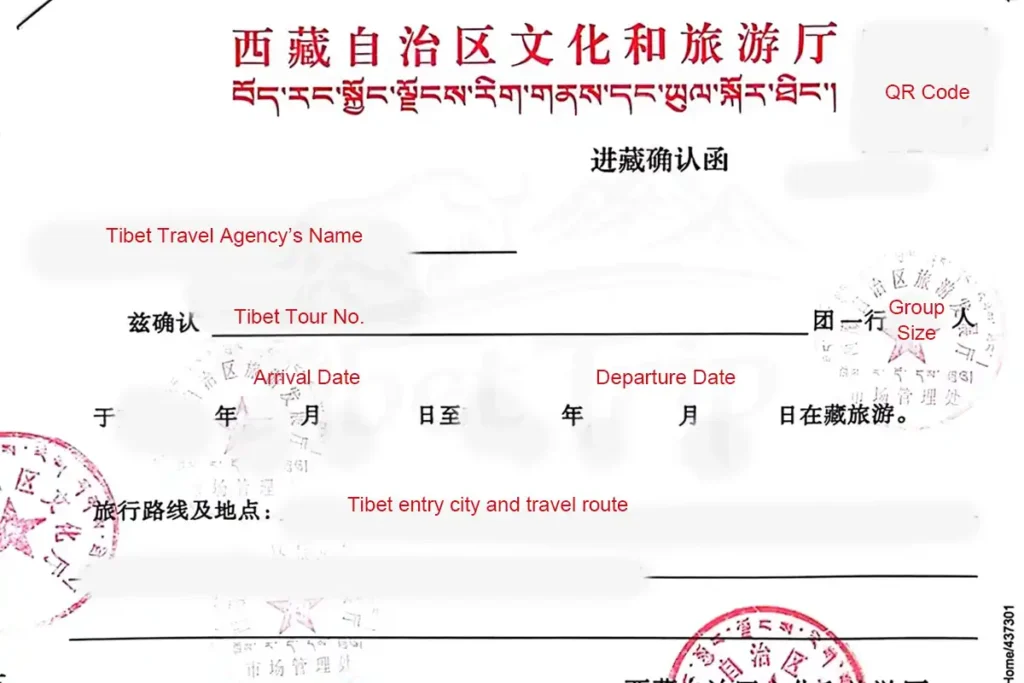
1. Tibet Travel Permit 2026 Quick Facts: What It Is, Who Needs It, and How to Get It
Before you dive into details, it helps to see the Tibet Travel Permit basics in one place. Many travelers feel confused because Taibet rules are different from other parts of China. The key point is simple: the Tibet Travel Permit is linked to a fixed route and set travel dates, so planning works best when you decide your route first and prepare clear documents early.
This quick facts section is made for fast reading. It tells you what the permit is, who usually needs it, how people normally get it, and what can slow the process. If you only read one part before you start planning, read this table. It will help you avoid last-minute stress and make your Tibet trip feel much easier.
| Topic | Quick answer | Why it matters | What to prepare |
| What the Tibet Travel Permit is | The key permit most international travelers need to enter Tibet. | Without it, you usually cannot enter Tibet by flight, train, or road. | Passport photo page scan + basic travel plan. |
| Who usually needs it | Most foreign passport holders. | You need it when boarding the flight and train to Tibet. | Passport details + travel dates + entry city. |
| Independent travel for foreign travelers | NO, the Tibet trip is usually arranged with a licensed agency and a confirmed itinerary. | The permit is tied to your route and travel plan, not open travel. | Your preferred route + pacing + must-see places. |
| How to get the permit | A licensed Tibet travel agency applies after your itinerary is confirmed. | Individuals usually cannot apply directly, and a clear route helps approval. | Passport scan + China Visa/entry proof (when needed) + final route outline. |
| Typical processing time | Usually working days; busy months can take longer. | Tight timelines increase risk and can limit route choices. | Submit early + keep buffer days before entry. |
| Cost basics | Permit handling is often bundled into a tour package. | Total cost depends more on route and service level than a “permit fee.” | Hotel level + route style (standard vs remote). |
| Where it is checked | Checked when entering Tibet and sometimes at checkpoints during the trip. | You should keep it easy to reach on travel days. | Printed copy + phone backup + passport. |
| What changes can cause delays | Date changes, entry method changes, or adding remote areas. | These changes can trigger re-checks and add time. | Lock dates + lock route before submission. |
NOTE: Delay Prevention (3 simple rules)
1. Lock your travel dates before submission.
2. Send clean, readable scans with exact passport spelling.
3. Avoid last-minute route changes, especially for remote areas.
2. What the Tibet Travel Permit Is and What It Covers
The Tibet Travel Permit is the main travel approval for Tibet. Think of it as a “route-based entry document.” It is issued for a specific trip plan, with clear dates and places. This is why your itinerary matters.
The permit is built around where you will go and how you will enter Tibet. At the start of the trip, it is often checked before you can continue your journey into Tibet. During the trip, it can also support routine checks along the way, especially when you pass through different areas.
To avoid confusion, here is what the permit covers, and what it does not cover.
| Covers | Does Not Cover |
| Entering Tibet for the approved trip dates | A China Visa or visa-free entry for China |
| Travel along the approved route on your itinerary | Free independent travel anywhere in Tibet |
| Routine checks during travel on the planned route | Extra permits for some remote areas and special routes |
| A permit linked to your booked travel plan | Last-minute route changes after approval |
Permit checks are part of normal Tibet travel, and they usually feel simple when your documents match the approved route and travel dates.
3. Who Needs the Tibet Travel Permit: Requirements by Traveler Type
Rules for Tibet documents depend on who you are traveling as. For foreign passport holders, the main rule is simple. In most cases, you need the Tibet Travel Permit to enter Tibet. The permit is linked to a confirmed travel route and fixed travel dates. If your plan includes remote areas, extra permits may also be needed.
Independent travel in Tibet is not allowed for foreign visitors. Tibet travel is arranged on a planned route with a guide and driver. This is why route details and travel dates matter before any permit work starts.
For Hong Kong, Macau, Taiwan, and Chinese mainland travelers, the document requirements can be different. If a group has mixed passports, each traveler may follow a different document path, so it is important to confirm entry city (Beijing/Chengdu/Xining), transportation (flight/train/road), travel route (Lhasa/Everest/Kailash/Kathmandu), departure dates, early.
| Traveler type | Tibet Travel Permits Needed |
| Foreign passport holders | 1. Tibet Travel Permit (a must for the whole TAR), 2. Aliens’ Travel Permit (for restricted regions like Kailash Mansarovar) 3. Military Area Entry Permit (for Ngari Prefecture) |
| Hong Kong / Macau travelers | 1. Mainland Travel Permit (回乡证, a must), 2. Border Permit (边境通行证/边防证, Frontier Pass for EBC, Gyirong, Ngari) |
| Taiwan travelers | 1. Taiwan Compatriot Permit (台胞证, a must), 2. Tibet Travel Permit (a must for the whole TAR), 3. Border Permit (边境通行证/边防证, Frontier Pass for EBC, Gyirong, Ngari) 4. Military Area Entry Permit (for Ngari Prefecture) |
| Chinese Mainland travelers | 1. Border Permit (边境通行证/边防证, Frontier Pass for EBC, Gyirong, Ngari) |
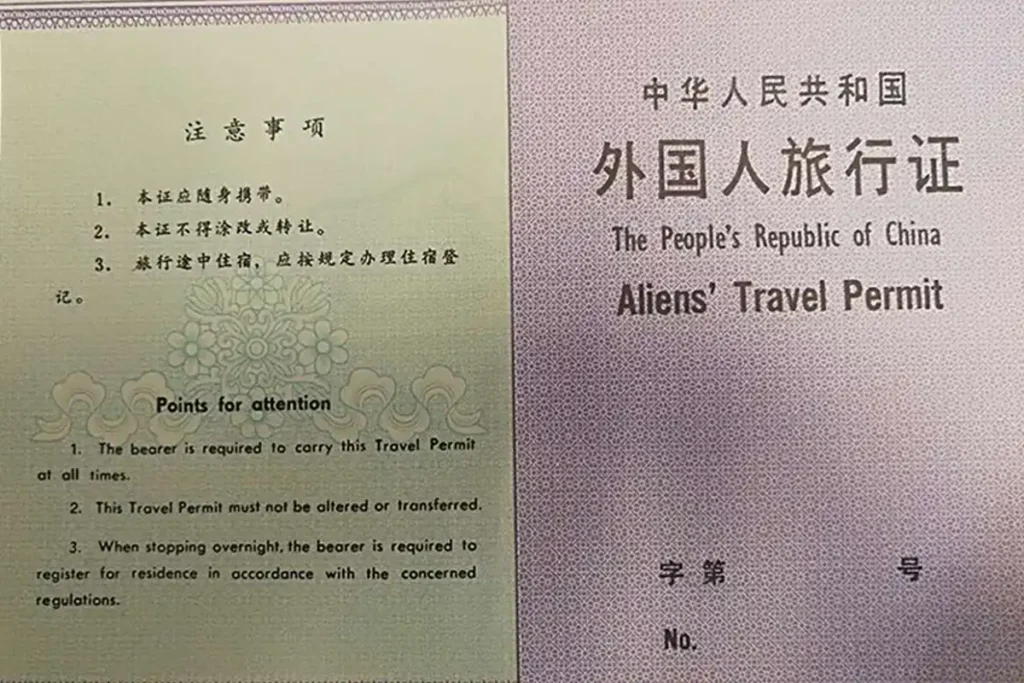
4. China Visa or Visa-Free Entry Rules That Affect Tibet Travel Permits
China entry rules can change what you need to prepare for Tibet. The safe order is always the same: confirm you can enter China first, then lock your Tibet travel route and dates for permit submission.
If your passport is on China’s 30-day visa-free entry list, you can enter China without applying for a China Visa (as long as you meet the conditions). After you enter China, you still arrange the Tibet Travel Permit in the normal way through a licensed Tibet travel agency. In practice, the only difference is what you submit as “China entry proof”: you may not have a visa page, so your entry plan and your passport scan become even more important.
If your passport only qualifies for the 10-day (240-hour) transit without visa policy, it works only when you are truly transiting A → China → B with a confirmed onward ticket to a third country or region, and you can stay only in the designated areas under that policy. Because Tibet is usually not part of those designated transit areas, most travelers cannot use the 240-hour transit policy to visit Tibet. In that case, you normally need a regular China entry option instead (a China Visa, or 30-day visa-free entry if you qualify).
| Item | What to check | Common mistake | Quick fix |
| Your China entry type | 30-day visa-free entry vs 240-hour transit without visa | Mixing “visa-free entry” with “transit without visa” | Identify which one you are using before planning a Tibet trip |
| If you use 30-day visa-free entry | Your passport is on the current visa-free list and your trip purpose fits | Assuming it applies to every nationality | Check the latest list close to travel |
| If you use 240-hour transit (10 days) | You have an onward ticket to a third country/region and you stay in designated areas | Using transit policy for a normal round trip or leaving the allowed area | Use a true A→China→B route and keep travel inside allowed areas |
| Tibet plan timing | China entry is confirmed first, then Tibet route and dates are fixed | Booking Tibet entry too tight or changing dates later | Build in buffer days and keep dates stable |
| China entry “proof” for permit work | What you can show (visa page, or visa-free plan + entry details) | Not having any clear China entry info ready | Prepare flight/train details and your planned entry date/city |
| Name matching | Name matches passport exactly (letters and spacing) | Using a shortened name or different spelling | Copy from the passport bio page exactly |
| Entry method into Tibet | Flight / train / road stays the same | Switching entry method after submission | Decide early and keep it unchanged |
| Route stability | Route cities and remote add-ons are finalized | Adding Everest/Kailash/remote areas late | Confirm the route first, then submit |
| Scan quality | Full-page, clear, no glare, no cut corners | Blurry photos and cropped edges | Re-scan in good light and re-check readability |
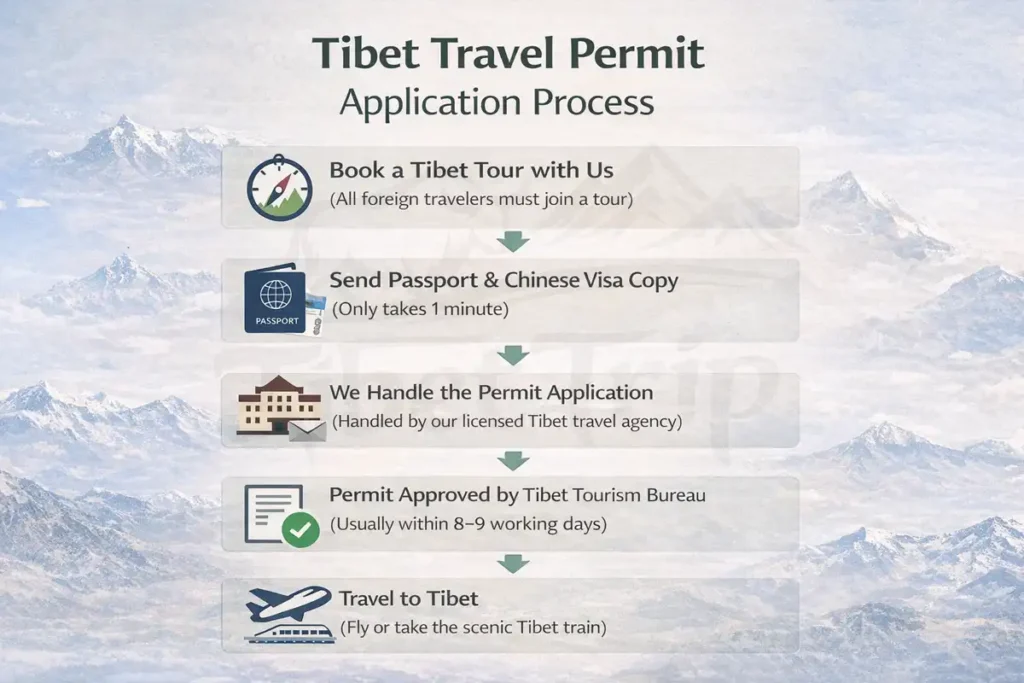
5. How to Apply for a Tibet Travel Permit Through a Licensed Tibet Travel Agency
The Tibet Travel Permit is processed around a fixed entry plan. Your entry city, entry method, travel dates, and route need to match across your documents and bookings. When these details are stable and your scans are clear, the application normally moves forward without extra back-and-forth. When plans change late, the paperwork often needs to be checked again, and timelines can stretch.
Step 1: Travel dates, entry city, entry method, and route are confirmed
A permit plan is built around four details: the date Tibet entry starts, the entry city, the entry method (flight, train, or road), and the route inside Tibet. These details are usually fixed first because they shape the document plan. Routes that stay around Lhasa and nearby areas are often simpler, while far or remote regions usually add more coordination and lead time.
Step 2: A compliant itinerary is arranged through a licensed Tibet travel agency
The itinerary is prepared through a licensed Tibet travel agency (like TibetTrip), and it is written to match the travel rules and document requirements. The itinerary also clarifies route cities, travel dates, and the entry method. When routes include Everest, Kailash, or other remote areas, the itinerary is usually planned with extra permits in mind from the beginning, so the document set stays consistent.
Step 3: Passport and China entry proof are provided as clear scans
Two items are typically needed: a passport bio page scan and China entry proof. China entry proof is usually the visa page if a visa is used, or the confirmed entry plan details if entry is visa-free. Scan quality matters in practice. Full pages, sharp text, no glare, and no cut corners reduce back-and-forth. Name spelling is usually checked letter by letter against the passport.
Step 4: Submission and tracking follow working-day timelines
After a quick document review, the application is submitted through the proper channel and tracked during processing. Timelines are counted in working days, and they can vary by season and route complexity. When issues happen, they are often simple: unclear scans, a spelling mismatch, or route details that need to be clarified for remote areas.
Step 5: The Tibet Travel Permit is delivered before entry, and documents are kept easy to access
After approval, the original Tibet Travel Permit is arranged for delivery so it is available before Tibet entry day. Entry and transfer days are the moments when documents are most often needed. A printed copy carried with the passport and a phone backup stored in an easy-to-open folder are common choices, because they reduce stress at boarding and checkpoints.
What changes after submission can cause re-checks?
Changing travel dates often means new document timing. Changing your entry method (for example, switching train to flight) can change how checks are handled. Adding remote routes can trigger extra paperwork. If changes are needed, confirm the new plan first, then re-check the document plan before you rebook transport, so you avoid last-minute problems.
6. Tibet Travel Permit Documents Checklist: What to Prepare Before Submission
Before submission, the permit file is built from two things: clear documents and a stable Tibet trip plan. The documents prove who is traveling, and the trip plan shows when and where the route will happen. If either part is unclear, the application often pauses and needs a fix. That is why scan quality matters as much as the route itself.
In practice, most problems are small but time-consuming. A passport page photo taken under a strong light can create glare. A phone scan can cut off one corner, and that corner may include a passport number line. A screenshot can look fine on a phone, but the text becomes blurry when it is opened on a computer. Even one missing middle name, an extra space, or a different spelling style can trigger a re-check. Keeping travel dates, entry method, and route cities stable also helps, because the permit request follows those details.
| Document | What to submit | Scan quality standard | Common problem | How to avoid it |
| Passport bio page | Full passport photo page (photo + personal details) | Full page, sharp text, no glare, no shadows, no cut corners | Blur, glare, cropped edges | Lay passport flat, use soft light, check every line is readable |
| China visa page (if used) | Visa page showing visa type and validity dates | Full page, clear visa dates and visa number | Only part of the page, unreadable numbers | Scan the full page and zoom in to confirm details are sharp |
| China entry proof (if visa-free) | Clear proof of entry plan (entry date + entry city/port) | Clean screenshot/PDF, readable date and city name | Missing entry date/city, messy screenshots | Keep one clear file that shows entry date and entry point in one view |
| Traveler details | Full name (exact passport spelling), nationality, passport number, date of birth | Typed text copied from passport | Name mismatch, missing middle name | Copy letter by letter from the passport bio page |
| Travel dates | Tibet entry date and trip end date | Clear date format (e.g., 15 May 2026) | Dates change after submission | Confirm dates first and keep a buffer day |
| Route cities | List of Tibet cities/areas on your itinerary | Clear route list in text | Route is vague or changes later | Finalize the route early, especially for remote areas |
| Entry method into Tibet | Flight, train, or road entry (plus entry city) | Clear statement in text | Entry method switches later | Fix entry method before submission and keep it stable |
7. Tibet Travel Permit Processing Time: Best Time to Apply and Common Delays
Processing time for Tibet permits is usually counted in working days, not calendar days. Weekends and public holidays do not move the process, so a “two-week gap” on the calendar can be much shorter in working days. Timing also depends on your route. A standard route around Lhasa and nearby areas is usually simpler, while remote regions often need extra checks and more coordination.
A buffer is the easiest way to make the plan feel safe. A few extra days before the Tibet entry day can protect your trip from normal delays such as a scan needing to be re-done or a route detail needing to be clarified. When the schedule is tight, even a small change can create stress. When the buffer exists, the same change is usually easy to handle.
A clear timing flow (how it usually happens)
First, scans are ready only after travel dates, entry city, entry method, and route cities are fixed.
Next, submission starts after scan quality and passport name spelling are checked.
Then, the approval window runs in working days, and the pace can change with season and route type. A “safe entry date” is one that leaves room for normal variation, not the tightest connection. Buffer time works best before Tibet entry day, because it protects flights or trains into Tibet.
Peak months (what changes)
Peak months in Tibet are usually May to October, when more travelers come for better weather. The busiest period is often July and August, and another very crowded window is Oct 1–7 (China National Day Golden Week). During these weeks, approvals can move slower, so earlier submission usually makes the trip feel much easier.
Common delays fall into three clear groups:
1) Document and scan issues (most common)
Glare on the page, blurred text, cropped corners, low resolution, or a passport name that does not match exactly. These issues often lead to a re-check, then a re-scan.
2) Missing or unclear trip details
Travel dates are not fixed, route cities are unclear, entry method is not confirmed, or China entry proof is not clear. When these details do not match one clean itinerary, submission often pauses.
3) Changes after submission (highest impact)
Changing travel dates can shift the approval window. Switching entry method (flight/train/road) can change how entry checks are handled. Adding remote areas can trigger extra paperwork. These changes often add extra steps and extra time.
8. Tibet Travel Permit Cost: What Is Usually Included in a Tibet Tour Package
Tibet tour costs can feel confusing because the permit is not a simple “one-time ticket”. The permit is linked to a confirmed route, fixed travel dates, and on-the-ground travel support, so it is usually handled together with the tour service. That is why many itineraries do not show a separate “permit price.” The total is mainly shaped by your route and your service level.
For a typical Tibet trip cost, a helpful baseline is this: many travelers plan around USD 200–350 per person per day for a comfortable private-style trip, depending on route, hotels, and vehicle level. A small-group style trip can be lower, while higher-end hotels, better vehicles, and remote routes can be higher. A short Lhasa-based route is usually easier to price and keep stable. Longer loops, far-west routes, and special areas often need more coordination and sometimes extra permits, which can push the total up.
| Usually included in a Tibet tour package | Usually not included (or depends) |
| Permit handling for the confirmed itinerary | International flights to/from China |
| Document review (name matching, scan checks) | China Visa fees (if a visa is needed) |
| Itinerary coordination linked to permit rules | Personal travel insurance |
| On-trip support that matches the approved route | Tips and personal spending |
| Basic trip logistics listed in the package | Optional upgrades not listed (hotel changes, special requests) |
9. Where the Tibet Travel Permit Is Checked: Flights, Trains, Roads, and Checkpoints
Permit checks are part of entering Tibet. No matter how Tibet is reached—by flight, train, or road—the Tibet Travel Permit is usually checked. When the permit matches your approved route and travel dates, these checks are routine and manageable. If the route includes Mount Everest (Tibet side) or Mount Kailash, extra permits are commonly involved, and those documents may be checked as well, especially on transfer days and at route checkpoints.
Flight to Tibet
Flights often have the clearest document moment. The permit is usually checked before boarding, so it needs to be ready before you reach the gate. When travel is in peak months, check-in lines can be longer, so arriving earlier helps.
Train to Tibet
Train entry is often checked before you board. Stations can be busy, and the process can be slower if many travelers are entering Tibet on the same day. Having documents ready in one place makes this step feel easy.
Overland to Tibet
Road entry usually includes more than one check point. Some checks happen at the main entry area, and others can happen on the road between regions. This is normal. It usually takes only a short time when your documents match your route.
Printed Copies and Phone Backups
A printed copy plus a phone backup is the most practical setup. The printed copy is fast to show, and the phone backup is helpful if papers get wet or misplaced. On entry and transfer days, keeping the permit and passport in the same easy-to-open folder saves time and reduces stress.
| Entry method | Typical check point | What to have ready | Practical tip |
| Flight into Tibet | Airline check-in / security check / boarding review before the flight | Passport + Tibet Travel Permit | Keep documents in a small folder, not in checked luggage |
| Train into Tibet | Security check / boarding review before the flight | Passport + Tibet Travel Permit | Arrive earlier than usual, since checks can take time during busy hours |
| Road entry into Tibet | Entry point checks on the route, and roadside checkpoints | Passport + Tibet Travel Permit | Keep documents close by, not in the trunk or deep in bags |
| Travel inside Tibet | Checkpoints between areas, sometimes at hotel or route control points | Passport + Tibet Travel Permit (and extra permits if required) | Keep the same document set with you every day, especially on driving days |
10. Entering Tibet from Nepal via Gyirong: Permit Planning and Group Visa Coordination
Entering Tibet from Nepal via Gyirong usually needs extra coordination. Border timing and document handling play a bigger role on this route, and procedures can change. For that reason, the entry plan is best confirmed before flights and hotels in Nepal are fully locked.
A group visa may be part of the Nepal-to-Tibet plan. It is handled as one coordinated entry document, so a few things matter more than usual: passport details must match exactly, travel dates should stay stable, and the group normally enters together on the same schedule. When the timeline is too tight, even a small delay can affect the whole plan.
A simple planning flow looks like this: first the crossing date and route are confirmed, then passport scans and traveler details are checked, then the China entry document for the Nepal route is coordinated (often in Kathmandu), and finally the border day is kept slightly flexible to handle road or border variation.
Key things that often cause problems are easy to spot: name spelling mismatches, not enough buffer time in Kathmandu, and packing the border day with long drives or tight connections.
Practical tip: buffer days on the Nepal side protect the whole schedule. Even 1–2 flexible days in Kathmandu can make the entry plan much smoother.
Latest updates: all the tourists can hold Chinese Tourist Visa (L Visa) to enter Tibet from Nepal via Gyirong Border or Lhasa Gonggar Airport, which greatly simplify the whole application process.
11. Extra Permits for Everest, Kailash, and Remote Tibet Routes: Route-to-Permit Map
If your Tibet tour plan includes Everest Base Camp (Tibet side) or the Mount Kailash region, the main Tibet Travel Permit is usually not enough, and extra permits are often needed. This matters because the permit set is linked to your confirmed route and travel dates. A route that stays around Lhasa is usually simpler, while remote west Tibet routes often involve more paperwork, more checkpoints, and more lead time.
Extra permits are not “optional add-ons.” They are part of the route approval. This is why the route should be decided early, especially for Everest and Kailash. When remote areas are added late, the document plan may need re-checks, which can stretch timelines and increase costs. Stable dates and buffer days are most helpful for remote routes, because long drives and route control points make the schedule less flexible.
| Route / Area | Tibet permits needed | Lead time note | Common checkpoint note | Planning tip |
| Lhasa + nearby (standard) | Tibet Travel Permit | Usually simpler and faster than remote routes | Checks focus on Tibet entry and routine route checkpoints | Keep the route stable and avoid last-minute city changes |
| Everest Base Camp (Tibet side) | Tibet Travel Permit | Usually needs more time than standard routes | Checks can happen on the driving route and at controlled points | Confirm EBC early and keep entry method and dates stable |
| Mount Kailash + Lake Mansarovar | Tibet Travel Permit, Aliens’ Travel Permit, Military Area Entry Permit | Often needs longer lead time than EBC | Checks are common along long driving sections | Add buffer days and avoid tight transfers on west Tibet routes |
| Far-west remote routes | Tibet Travel Permit, Aliens’ Travel Permit, Military Area Entry Permit | Often needs the longest lead time | More route control points and checks during long drives | Confirm all route stops in advance and keep the plan simple |
| Nepal via Gyirong Border routes (special entry regions) | Tibet Travel Permit, Aliens’ Travel Permit, Military Area Entry Permit | Timing can be sensitive; changes can trigger re-checks | Checks can happen at route control points and entry corridors | Lock the route early and avoid late add-ons |
Extra permit requirements can change, and a licensed agency confirms the correct permit package before submission. Remote routes usually need more lead time, so stable dates and buffer days help reduce re-checks. If you share your travel dates, entry city, and route idea (Everest, Kailash, or standard Lhasa route), our team can check which permits apply and tell you what to prepare.
12. Extra Permits for Everest, Kailash, and Remote Tibet Routes: Route-to-Permit Map
Most delays come from fixable scan issues and plan changes. A permit file is checked against your passport details and your confirmed route. When images are hard to read or the itinerary keeps shifting, the process usually pauses for a re-check.
If you want a smoother timeline, a clean document set and a stable plan are the two biggest time-savers. If you share your travel dates and route idea, our team can pre-check your documents and confirm what will be needed before submission.
Applying too late
Working days add up fast, and peak months can move slower. When the schedule is tight, even one small re-check can push the entry day.
Sending unclear scans (glare / blur / cropped edges / low resolution)
A file that looks fine on a phone can become unreadable on a computer. Cropped corners and reflections are especially common problems.
Passport name mismatch
Missing a middle name, different spelling style, or extra spaces can trigger a re-check. Names usually need to match the passport exactly, letter by letter.
China entry proof is missing or unclear
A visa page may be unreadable, or visa-free entry details may be incomplete. When China entry details are not clear, the permit plan can pause.
Route cities are vague
“Tibet tour” is not enough for submission. A clear list of route cities and the entry method is usually needed.
Changing plans after submission
Date changes, switching flight/train/road entry, or adding new stops often triggers extra checks and adds time.
Adding Everest / Kailash / remote routes late
These routes often involve extra permits and more coordination. Late add-ons are a common reason timelines stretch and costs rise.
Nepal via Gyirong timing is too tight
Border-day timing can vary. Back-to-back long drives and tight connections often create problems without buffer days.
13. Conclusion: Final Notes for Tibet Travel 2026 and a Simple Final Checklist
A smooth Tibet tour plan in 2026 usually starts with one key step: China entry is confirmed first, then the Tibet permit plan follows a fixed route and travel dates. When the route, entry method (flight/train/road), and travel dates stay stable, the permit process is much easier to manage. Clear scans also matter more than most travelers expect. Full-page images, sharp text, and an exact passport-name match help avoid re-checks and keep timelines on track.
Route choice affects everything. A standard Lhasa route is usually simpler, while Mount Everest (Tibet side), Mount Kailash, and other remote or border routes often need extra permits and more lead time. Peak travel months are usually May to October, especially July–August, plus Oct 1–7 (China National Day Golden Week), when timing can be slower. Buffer days placed before Tibet entry day are the safest way to protect your schedule, especially for remote routes or Nepal via Gyirong plans.
If you would like a clear answer for your exact Tibet trip, please contact us. Just share your travel dates, entry city, entry method, route interest (Lhasa / Everest / Kailash / Nepal via Gyirong), and hotel level. Our licensed team will reply with the correct document list, any extra permits you may need, and a realistic permit timeline with the right buffers.
Latest Tibet Travel Permit Updates & Policy News
Stay informed with the most recent changes and official announcements related to Tibet Entry Permits (Tibet Travel Permits and related letters). Here you’ll find up-to-date updates on regulations, application requirements, processing timelines, and other essential travel policy news to help you prepare and plan your Tibet trip with confidence.
Lake Mansarovar Mystery: Discover Secrets in Mansarovar Yatra 2026
Lake Mansarovar Mystery: Discover the secrets behind Tibet's holy lake, revered by multiple religions for its spiritual power, healing waters, and ancient legends.
Read MoreKailash Parikrama 2026 in Horse Year: Kailash Outer & Inner Kora and Charan Sparsh
Experience Kailash Parikrama in Horse Year 2026. Join Kailash outer, inner kora, or Charan Sparsh for spiritual blessings and a life-changing pilgrimage.
Read More